
When a Panel Upgrade Is the Right Safety Decision

A breaker that trips once after a storm is not necessarily a sign that your entire electrical system has failed. A panel upgrade becomes the right decision when the panel can no longer safely distribute power, support planned electrical demand, or meet current protection and code requirements. For homeowners and property managers, the issue is not simply having more breaker spaces. It is protecting people, equipment, and the building from an electrical system that has been asked to do more than it was designed to handle.
An electrical panel is the control point for the property’s branch circuits. It receives power from the utility service, directs that power through breakers, and is designed to interrupt dangerous overcurrent conditions. When it is outdated, damaged, undersized, improperly installed, or overcrowded, the consequences can include repeated outages, overheated conductors, damaged appliances, failed inspections, and elevated fire risk.
What a Panel Upgrade Actually Changes
A proper panel upgrade is a designed electrical project, not a breaker-box swap. Depending on the condition of the service, the work may involve a new load center, correctly sized breakers, updated grounding and bonding, a service disconnect, meter equipment coordination, feeder upgrades, and repairs to damaged or noncompliant wiring connections.
The scope depends on the building. Some properties need a larger panel with additional circuit capacity while retaining an adequate service. Others require a full service upgrade because the existing service conductors, meter base, disconnect, or main rating cannot safely support the intended load. A licensed electrician verifies these conditions before recommending equipment.
This distinction matters. Installing a larger panel without confirming the upstream service capacity does not create more usable power. It may instead leave the property with equipment that appears updated but remains limited by undersized conductors or service components.
Panel capacity is not the same as available power
A 200-amp panel may have room for more breakers, but that alone does not establish that every new appliance, charger, HVAC system, or commercial load can operate at once. Electrical capacity is determined through a load calculation that considers the type of equipment, its rating, demand factors, and how the property is used.
For example, a home adding an electric range, heat pump, tankless water heater, workshop equipment, and EV charger may need more than open breaker positions. A small business adding refrigeration, production equipment, new HVAC units, or upgraded lighting may need a more detailed evaluation of service demand and distribution equipment. The correct answer depends on measured conditions and planned use, not on guesswork.
Signs Your Property May Need a Panel Upgrade
Frequent breaker trips deserve professional attention, especially when they occur on circuits with ordinary, predictable use. A breaker is meant to trip when it detects a condition that could overheat conductors or damage the circuit. Repeatedly resetting it without identifying the cause can allow an unsafe condition to continue.
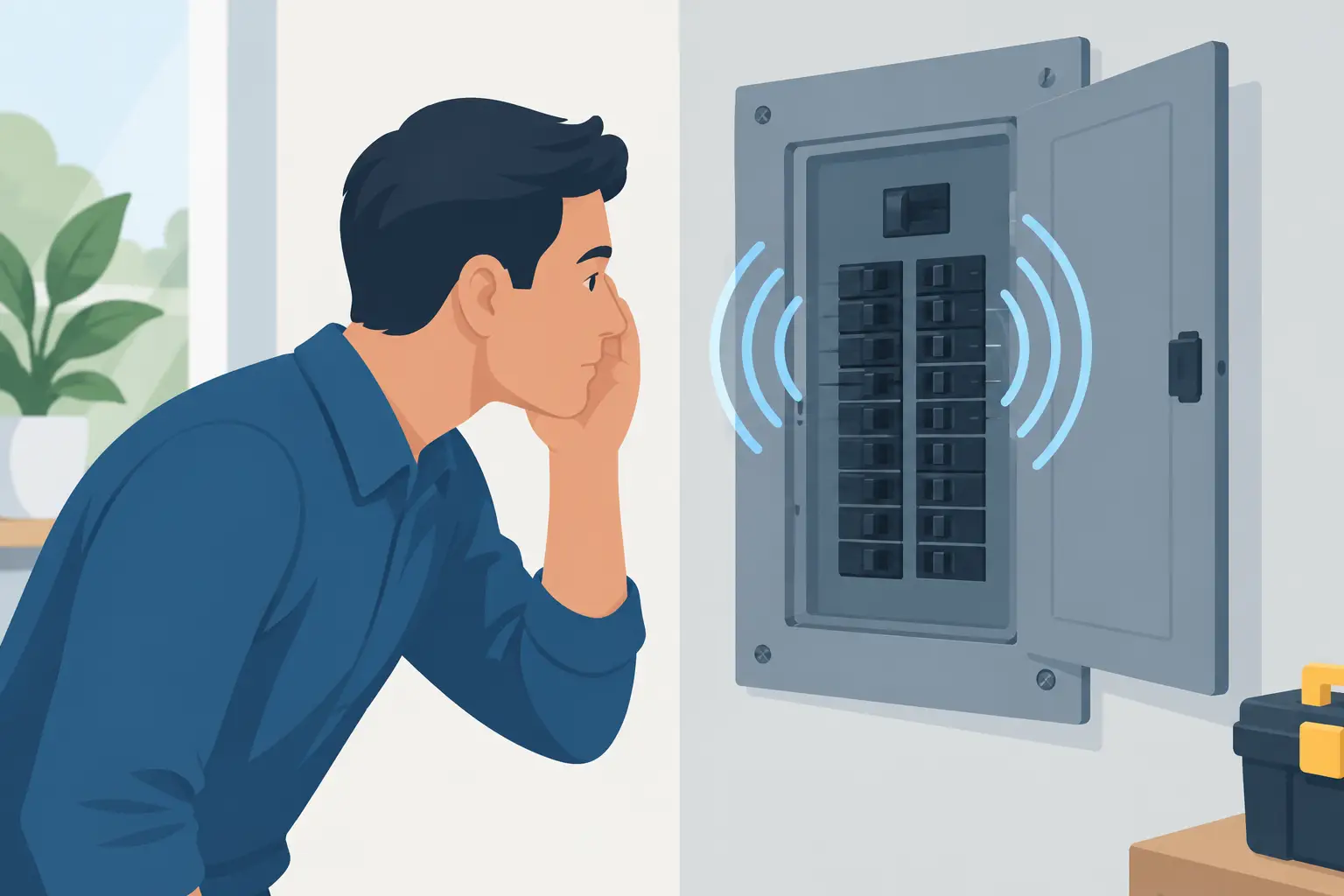
Other warning signs include breakers that feel hot, buzzing or crackling from the panel, burning odors, corrosion, flickering lights when major equipment starts, visible damage, and a panel that uses fuses or obsolete equipment. Rust around a panel, meter base, or exterior service equipment can also signal water intrusion that requires correction.
Age by itself does not always require replacement. A well-maintained older panel may still serve a property safely, while a newer installation may have defects, poor workmanship, incorrect breaker types, or inadequate capacity. The key question is whether the system is safe, properly configured, and capable of serving present and anticipated loads under current applicable requirements.
Renovation and new equipment can expose hidden limits
Electrical demand often changes before property owners reconsider the panel. Kitchen remodels, additions, garage conversions, electric vehicle charging, pool equipment, heat pumps, and electrification projects all add load. Even if the lights still work, new equipment may require dedicated circuits, GFCI or AFCI protection, disconnecting means, or a larger service capacity.
Commercial changes carry similar concerns. Tenant improvements, equipment replacement, expanded work areas, and changes in occupancy can alter load requirements and inspection obligations. A panel with no available capacity can delay a buildout, disrupt operations, or force costly changes late in the project. Early evaluation provides a clearer path for budgeting, permitting, and scheduling.
The Safety and Compliance Work Behind the Panel
Panel work involves high-energy conductors and must be performed with disciplined safety procedures. Before installation begins, the electrician evaluates service size, panel condition, conductor sizing, grounding electrode connections, neutral and grounding configurations, overcurrent protection, labeling, and the condition of connected circuits.
The National Electrical Code provides baseline requirements, but local rules and utility requirements can affect the final design. Permit and inspection requirements may apply to service changes, equipment replacements, and significant alterations. A documented, code-focused approach protects the property owner by establishing what was installed, why it was selected, and how the work was verified.
Grounding and bonding are commonly misunderstood. They are related but have separate functions within the electrical system. Proper bonding provides an effective fault-current path intended to help protective devices operate. Grounding connects the system to the grounding electrode system and helps stabilize voltage conditions. Errors in either area can create shock hazards or prevent breakers from clearing faults as intended.
A panel upgrade is also an opportunity to correct labeling issues. Every breaker should be accurately identified so occupants, maintenance personnel, and emergency responders can isolate circuits quickly. Vague labels such as “lights” or “plugs” are not operationally useful. Clear documentation supports safer troubleshooting and reduces unnecessary downtime.
What to Expect During a Professional Upgrade
The process begins with an on-site assessment, not an equipment estimate based only on photographs or panel size. The electrician reviews the existing installation, asks about present and future electrical loads, and determines whether the concern is a failing panel, insufficient circuit capacity, an inadequate service, or a fault elsewhere in the system.
Once the scope is defined, the project can be planned around permits, utility coordination if required, equipment lead times, and the necessary shutdown window. Residential work may require the home to be without power for part of the day. Commercial projects need even more planning because refrigeration, computers, security systems, production equipment, and tenant operations may be affected.
The installation should include verification after energization. This means checking terminations, breaker configuration, panel labeling, grounding and bonding connections, and the operation of affected circuits. Final inspection, when required, is part of compliance verification rather than an optional administrative step.
Do not solve capacity problems with unsafe shortcuts
Tandem breakers, improvised subpanel connections, oversized breakers, and repeated breaker resets are not universal fixes. Some panels are listed for specific tandem breaker arrangements, but others are not. A breaker must match the conductor rating and the panel manufacturer’s requirements. Increasing breaker size to stop nuisance trips can overheat wiring and remove critical protection.
Likewise, a subpanel can be an effective way to distribute circuits to an addition, detached structure, or commercial area, but it must be fed by equipment with sufficient available capacity. It does not eliminate the need for an accurate load calculation.
Choosing the Right Scope for Your Property
The least expensive option is not always the lowest-cost decision over time. Replacing only a damaged panel may be appropriate when the service and wiring are adequate. Planning for additional capacity may make more sense when a renovation or electrification project is already scheduled. For commercial facilities, phased work may reduce disruption, even if it requires more coordination.
The right recommendation should explain the condition found, the code and safety issues involved, the available options, and the operational impact of each choice. Property owners should be able to understand whether the proposal addresses a current hazard, supports planned load growth, improves inspection readiness, or all three.
For properties in Florence, Muscle Shoals, Sheffield, Tuscumbia, Athens, Decatur, and nearby North Alabama communities, regional contractor experience also matters. Local permitting practices, utility coordination, and building conditions affect the schedule and scope of service equipment work.
A panel is not a place for deferred maintenance or trial-and-error repairs. If breakers trip repeatedly, equipment is warm or damaged, the panel has no room for necessary circuits, or your next project will add substantial electrical demand, schedule a qualified assessment before the condition becomes an outage, failed inspection, or safety event. M&S Electric applies licensed, NEC-focused evaluation to help property owners make that decision with clear documentation and accountable workmanship.


Comments