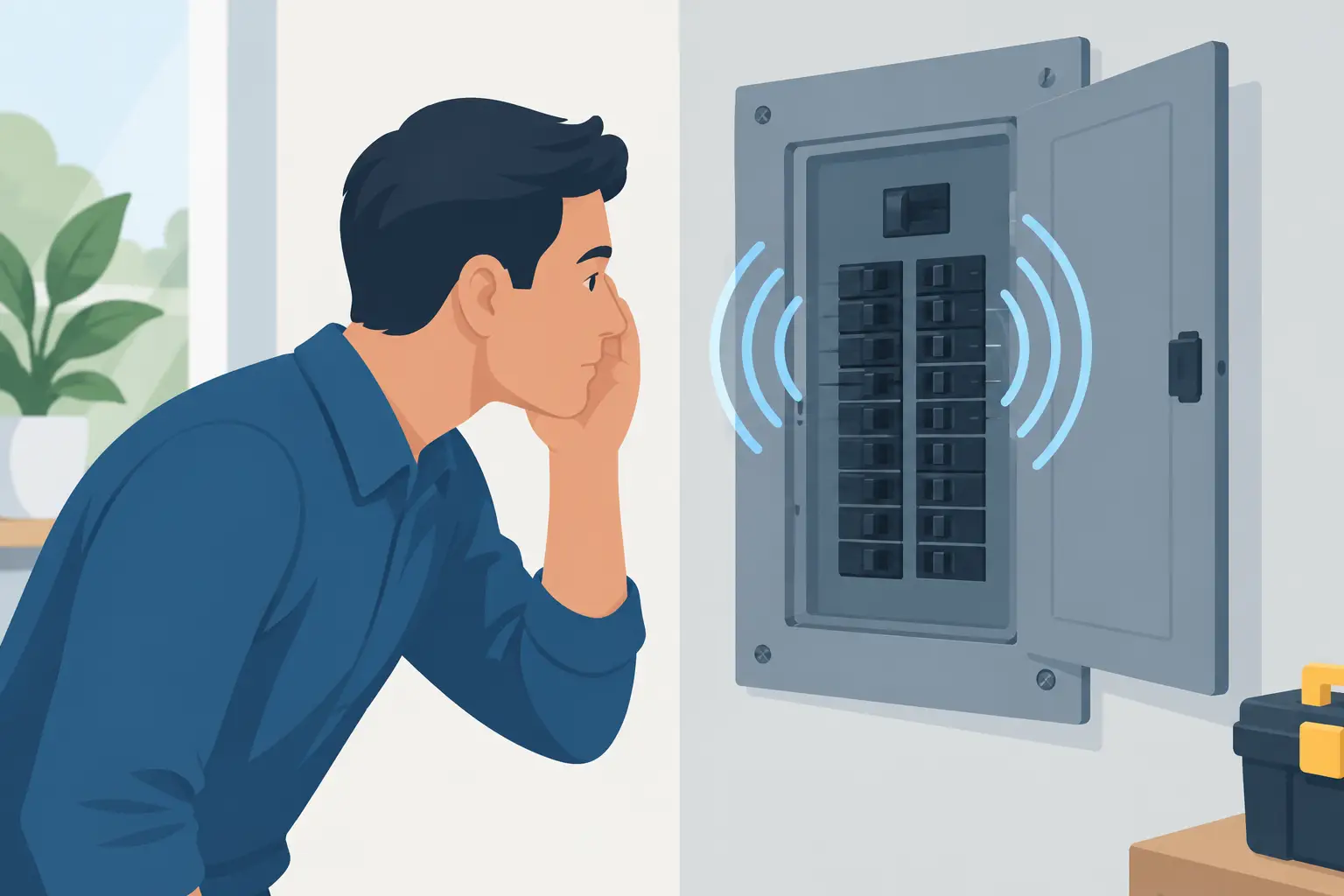
Why Does Breaker Hum? Causes and Safe Next Steps

A breaker panel is not supposed to become part of the background noise in your home or business. If you are asking, why does breaker hum, treat the sound as a condition worth evaluating, especially if it is new, getting louder, or accompanied by heat, flickering lights, tripped breakers, or a burning odor.
A low electrical sound can have several causes. Some are tied to normal magnetic forces inside energized equipment, while others point to a loose connection, an overloaded circuit, a failing breaker, or arcing. The difference matters because a panel fault can create shock, fire, equipment-damage, and downtime risks. The safe response is not to remove the panel cover or repeatedly reset a breaker. It is to identify the warning signs, reduce the load when appropriate, and arrange a licensed electrical diagnosis.
Why Does a Breaker Hum?
Circuit breakers control power through internal contacts and a trip mechanism. When current flows, electrical and magnetic forces are present inside the device. Under certain conditions, those forces can produce a faint vibration or hum. However, a clearly audible hum from a breaker or electrical panel is not something to dismiss as normal household noise.
The location of the sound is the first detail that matters. Noise may come from one individual breaker, the main breaker, the panel enclosure, a transformer, a meter base, or equipment connected to the circuit. These components require different diagnostic steps. A licensed electrician can isolate the source without exposing occupants to energized panel components.
Heavy electrical load
A breaker may hum when it is carrying a substantial, sustained load. Electric heat, HVAC equipment, water heaters, dryers, ranges, shop tools, commercial refrigeration, and high-demand machinery can all place significant current on a circuit. As current increases, internal vibration can become more noticeable.
Load-related noise does not automatically mean the breaker is defective. But it does raise questions that should be answered: Is the circuit properly sized for the equipment? Is the load continuous? Has additional equipment been added since the circuit was installed? Is the breaker, conductor, and panel rated for the actual demand?
A circuit that routinely operates near its practical capacity may run warmer and experience more stress over time. For commercial properties, that can lead to nuisance tripping, equipment interruptions, and avoidable operational downtime. For homes, it can signal that a dedicated circuit or panel upgrade is needed.
A loose or deteriorated connection
Loose electrical connections are a more serious concern. A conductor that is not properly terminated can create resistance. Resistance creates heat, and heat can damage wire insulation, terminals, breakers, and bus connections. It may also produce humming, buzzing, crackling, or intermittent power symptoms.
The sound may change when a large appliance starts or when the circuit load rises. You might also notice a warm breaker, discoloration around the panel, a hot electrical odor, or lights that flicker when equipment cycles on. These conditions require prompt professional attention.
Do not attempt to tighten breaker terminals yourself. Even with the main breaker switched off, parts of many panels can remain energized. Proper diagnosis requires appropriate testing, torque procedures, component evaluation, and verification that the repair meets applicable NEC and local requirements.
A failing breaker or damaged panel component
Breakers are mechanical protective devices, and they can wear or fail. Internal components may deteriorate due to age, repeated overloads, moisture exposure, corrosion, manufacturing defects, or heat damage. A breaker that hums, feels unusually warm, trips without a clear cause, or will not reset reliably may need replacement.
The breaker is not always the only component involved. Damage to the panel bus bar, the connection between the breaker and bus, or the neutral and grounding systems can produce similar symptoms. Replacing a breaker without examining the surrounding equipment can leave the original problem unresolved.
This is particularly relevant in older panels, panels with a history of water intrusion, and electrical systems that have been expanded over many years. A diagnostic inspection should evaluate the full condition of the distribution equipment, not just the noisiest part.
Arcing inside the electrical system
Arcing occurs when electricity jumps across a gap instead of traveling through a secure intended connection. It can generate heat, sound, and visible damage. A humming or buzzing sound alone does not prove arcing, but noise combined with crackling, a burning smell, smoke, sparks, or visible charring is an emergency condition.
Turn off power at the main disconnect only if you can do so safely without approaching smoke, sparks, heat, or damaged equipment. If there is an active fire, smoke, or immediate danger, leave the area and contact emergency services. Do not pour water on electrical equipment.
For a suspected panel fault without active fire, avoid using the affected circuit and arrange emergency electrical service. A qualified electrician can inspect the panel, test the circuit, locate damaged connections, and determine whether the issue is isolated or part of a broader system failure.
When a Humming Breaker Needs Immediate Action
A faint sound that occurs briefly under a known heavy load may not require an emergency response, but it should still be documented and monitored. The situation changes when the hum is persistent, loud, or paired with other warning signs.
Shut off the affected circuit if you can identify it safely and if doing so will not create another hazard. For example, do not disable equipment that supports medical needs, critical refrigeration, security systems, or essential business operations without a contingency plan. In those cases, contact a licensed electrician for immediate guidance.
Treat the following conditions as urgent:
The panel, breaker, or wall near the panel feels warm or hot.
You smell burning plastic, overheated insulation, or smoke.
The sound is crackling, snapping, sizzling, or rapidly getting louder.
Lights flicker, dim, or brighten unexpectedly.
A breaker trips repeatedly after loads are removed or reduced.
There is visible discoloration, corrosion, melted material, or moisture inside or around the panel.
Avoid the common mistake of resetting a tripped breaker again and again. A breaker trips to interrupt an unsafe condition. Repeated resets can energize a fault and increase damage. If a breaker trips once after a clearly temporary overload, reducing the load before a single reset may be reasonable. If it trips again, leave it off until the circuit is inspected.
What a Licensed Electrician Will Check
A proper evaluation begins with the panel's condition, breaker ratings, circuit labels, load characteristics, and visible signs of overheating or damage. The electrician may measure voltage, current, connection integrity, and temperature while following safe energized-work practices where testing requires it.
The inspection should determine whether the noise is caused by the breaker itself, the circuit load, a terminal connection, the panel bus, or another component such as a transformer or service equipment. If the issue is load-related, the corrective work may involve redistributing circuits, adding a dedicated circuit, replacing undersized wiring, or upgrading service and panel capacity.
For commercial properties, diagnosis should also account for startup current, motor loads, equipment duty cycles, and any recent changes to operations. A panel that was adequate for a previous tenant or earlier workflow may not support current demand with the required safety margin. Clear documentation of findings and repairs helps property owners manage compliance, maintenance planning, and future expansion.
Preventing Future Panel Noise and Electrical Stress
Electrical panels benefit from planned attention, especially in properties with older wiring, high-demand appliances, additions, renovations, or expanding commercial loads. Safety inspections can identify heat damage, loose terminations, corrosion, improper breaker sizing, overloaded circuits, and code-related concerns before they become disruptive failures.
Homeowners can help by recognizing changes in the electrical system rather than normalizing them. Note when the hum occurs, which equipment is operating, whether lights change, and whether the sound comes from the panel or elsewhere. That information helps speed an accurate diagnosis.
Business owners and facility managers should treat unusual electrical noise as a maintenance signal, not merely an annoyance. A short, scheduled inspection is often far less disruptive than an unexpected panel failure during operating hours.
A humming breaker deserves a measured response: keep clear of energized equipment, do not attempt internal panel repairs, and have the source verified by a licensed electrician. M&S Electric provides safety-focused diagnostics for homes and businesses across North Alabama, with repairs built around code compliance, documented findings, and dependable long-term performance.


Comments