
Why a Circuit Breaker Keeps Tripping at Home

A circuit breaker keeps tripping for a reason: it has detected a condition that could overheat wiring, damage equipment, or create a shock or fire hazard. The interruption may be inconvenient, but the breaker is doing its assigned job. The correct response is not to keep resetting it. The correct response is to identify what changed, isolate the problem safely, and arrange qualified diagnosis when the cause is not obvious.
For homeowners and property managers, the distinction matters. A single overloaded circuit may be resolved by reducing the connected load. A breaker that trips without anything plugged in, trips immediately after reset, or serves an area with damaged wiring requires a licensed electrical contractor and a code-based repair plan.
What a Tripping Breaker Is Telling You
A circuit breaker protects conductors from excessive current. When too much current moves through a circuit, wires can heat beyond their rated capacity. The breaker opens the circuit before that heat becomes a larger hazard.
Not every trip means the same thing. Standard breakers primarily respond to overloads and short circuits. Ground-fault circuit interrupter, or GFCI, protection is designed to reduce shock risk where electricity and moisture may meet, such as bathrooms, kitchens, garages, exterior areas, and unfinished spaces. Arc-fault circuit interrupter, or AFCI, protection detects certain dangerous arcing conditions that can occur with loose connections, damaged cords, or compromised wiring.
Modern homes may have AFCI or dual-function breakers in bedrooms, living spaces, and other required locations. These devices can respond to conditions that an older standard breaker would not detect. That sensitivity is a safety feature, not a defect to bypass.
Common Reasons a Circuit Breaker Keeps Tripping
The circuit is overloaded
An overload occurs when the combined demand on one circuit exceeds its safe capacity. Space heaters, hair dryers, toaster ovens, air fryers, microwaves, portable air conditioners, and power tools can each draw substantial current. Two or three high-demand appliances running on the same circuit can trip a breaker even when every appliance is functioning properly.
This is common in older homes, garages, workshops, and kitchens where the electrical layout no longer matches how the space is used. Extension cords and plug strips can hide the amount of load being placed on one receptacle circuit. A power strip does not create additional circuit capacity.
If the breaker trips only when specific equipment runs together, unplug or turn off other loads and test one device at a time. This can help establish whether demand is the issue. It does not, however, prove that the circuit is adequately designed for long-term use. Repeated overloads may justify a dedicated circuit, additional receptacles, or a panel and load evaluation.
A plugged-in appliance or cord has failed
A damaged appliance can trip a breaker the moment it is switched on. Frayed cords, crushed insulation, loose plugs, moisture intrusion, failing heating elements, and internal motor faults are common contributors. Portable equipment used in garages, outdoor areas, or commercial maintenance spaces is especially vulnerable to cord damage.
Start by unplugging everything served by the affected circuit. Reset the breaker once. If it holds, reconnect devices one at a time, allowing each device to operate before adding the next. If the breaker trips when a particular appliance is connected or started, stop using that equipment until it is repaired or replaced.
Do not continue testing an appliance that produces a burning odor, sparks, unusual heat, buzzing, or visible damage. Those signs warrant immediate removal from service.
There is a short circuit or ground fault
A short circuit occurs when energized wiring contacts a neutral conductor or another unintended path. A ground fault occurs when current escapes to ground, including through a damaged conductor, wet component, metal enclosure, or person. Both conditions can cause a breaker or GFCI device to trip quickly.
Unlike a straightforward overload, a short or ground fault may trip the breaker immediately, even with little or no normal load connected. The fault may be inside a receptacle, switch box, light fixture, junction box, appliance, attic cable, or underground exterior circuit. Locating it safely often requires electrical testing equipment and access to the affected wiring path.
Water exposure should be treated seriously. If a circuit begins tripping after a roof leak, plumbing leak, flooding, pressure washing, or heavy rain, leave the circuit off and have it inspected. Resetting a wet circuit can place people and property at risk.
A loose connection or damaged branch circuit is developing
Electrical connections are expected to remain mechanically secure and electrically sound. Over time, however, connections can loosen due to age, vibration, thermal cycling, poor previous workmanship, or physical damage. Loose terminations may create resistance and arcing, generating heat at a receptacle, switch, panel connection, or splice.
Warning signs include a warm or discolored wall plate, flickering lights, intermittent power, crackling sounds, a persistent hot-plastic smell, or a breaker that trips unpredictably. These are not conditions to monitor casually. Turn off the affected circuit if it can be identified safely and request professional service.
Rodent damage, nails or screws driven into walls, remodeling work, and aging aluminum wiring systems can also contribute to branch-circuit failures. The repair may be relatively contained, or it may require a broader wiring correction. The answer depends on inspection findings, not guesswork.
The breaker, panel, or service capacity needs evaluation
Breakers can fail, but replacing a tripping breaker without diagnosing the circuit is not a reliable repair. A breaker that trips may be responding correctly to a real fault downstream. Installing a larger breaker to stop trips is particularly dangerous when the wire size and circuit design do not support it. Oversizing overcurrent protection can allow conductors to overheat before the breaker opens.
In some properties, the problem is larger than one branch circuit. Panel corrosion, damaged bus connections, outdated equipment, insufficient service capacity, or additions made without a coordinated load calculation can affect electrical reliability. Commercial spaces may experience similar issues after equipment changes, tenant improvements, or expanded HVAC and process loads.
A licensed electrician can evaluate the circuit, conductor sizing, breaker type, panel condition, grounding and bonding, and actual load demand. The appropriate repair may range from replacing a failed receptacle to installing dedicated circuits or upgrading service equipment. NEC requirements and local inspection standards guide that work.
Safe Steps Before You Request Service
There are a few observations that can make diagnosis more efficient. First, identify what lost power. Note the rooms, receptacles, lights, or equipment affected. Then consider what was operating when the trip occurred and whether the problem followed weather, a leak, a recent installation, or construction work.
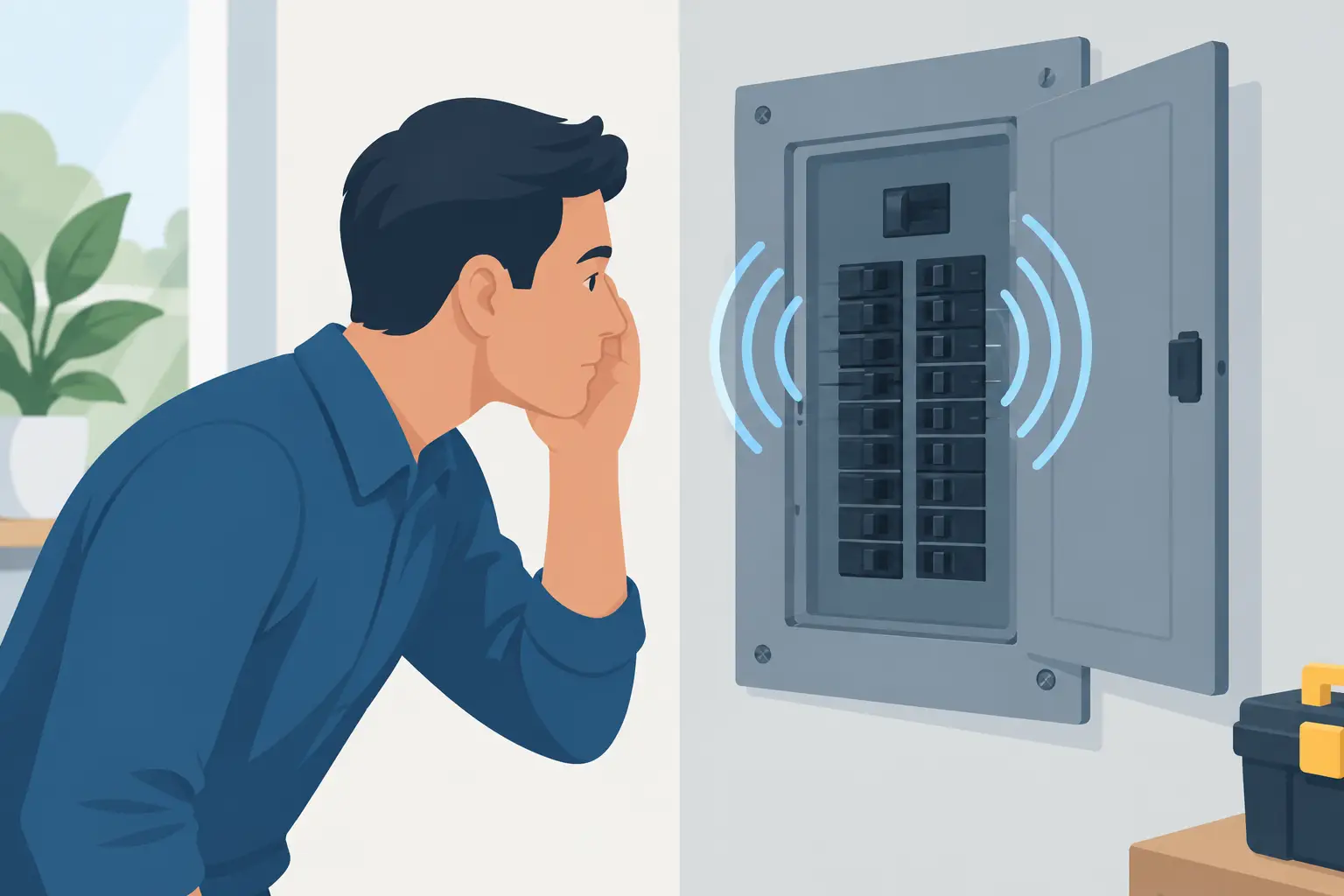
At the panel, a tripped breaker may sit between ON and OFF. Move it firmly to OFF, then back to ON one time. If it trips immediately, will not reset, or trips again after normal use resumes, leave it off. Do not hold the breaker in position, tape it, replace it with a larger breaker, or repeatedly reset it.
Avoid removing the panel cover or working inside the electrical panel. Even when a main breaker is off, portions of service equipment may remain energized. Electrical diagnosis belongs with trained, licensed personnel using proper test procedures and protective practices.
When a Tripping Breaker Is an Emergency
Treat the situation as urgent if you smell burning insulation, see smoke or sparks, hear persistent buzzing at the panel or a wall device, observe scorch marks, or feel heat at a breaker, receptacle, switch, or electrical enclosure. Turn off power only if it can be done without approaching smoke, water, or damaged equipment. Keep people away from the area and seek emergency electrical service.
For businesses, a tripping circuit that affects refrigeration, life-safety systems, critical IT equipment, production equipment, or building access should also receive prompt professional attention. Temporary workarounds can create safety exposure, code issues, equipment damage, and avoidable downtime.
A Repair Should Solve the Cause, Not Silence the Symptom
Reliable electrical repairs begin with verification. A qualified contractor should identify the affected circuit, test for overloads and faults, inspect devices and accessible connections, confirm conductor and breaker compatibility, and document repairs where appropriate. If an upgrade is recommended, the reason should be clear: increased demand, deteriorated equipment, inadequate circuit design, or compliance correction.
For homes and facilities across the Tennessee Valley, M&S Electric provides licensed troubleshooting and safety-focused repairs built around NEC-based standards. A circuit that trips is giving you useful information. Leave the protection in place, record the symptoms, and have the underlying condition corrected before it becomes a larger failure.


Comments