
Flickering Lights Electrical Problem: What It Means

A flickering lights electrical problem is not always a bad bulb or a minor annoyance. When lights dim, pulse, or briefly brighten without an obvious reason, the electrical system may be signaling a loose connection, overloaded circuit, failing fixture, or utility-side service issue. The pattern matters. A single flickering lamp calls for a different response than lights changing brightness throughout a home, office, or facility.
Electrical faults can create heat at connection points, damage equipment, interrupt business operations, and increase fire risk. The appropriate response is not guesswork. A licensed electrician should identify the source, verify circuit integrity, and determine whether repairs must meet current National Electrical Code requirements.
Start With the Pattern of the Flicker
Before replacing bulbs or opening a fixture, observe what is happening. Does one recessed light flicker only when the HVAC system starts? Do lights in one room dim when a microwave, space heater, or shop tool runs? Or do multiple lights across the building brighten and dim at the same time?
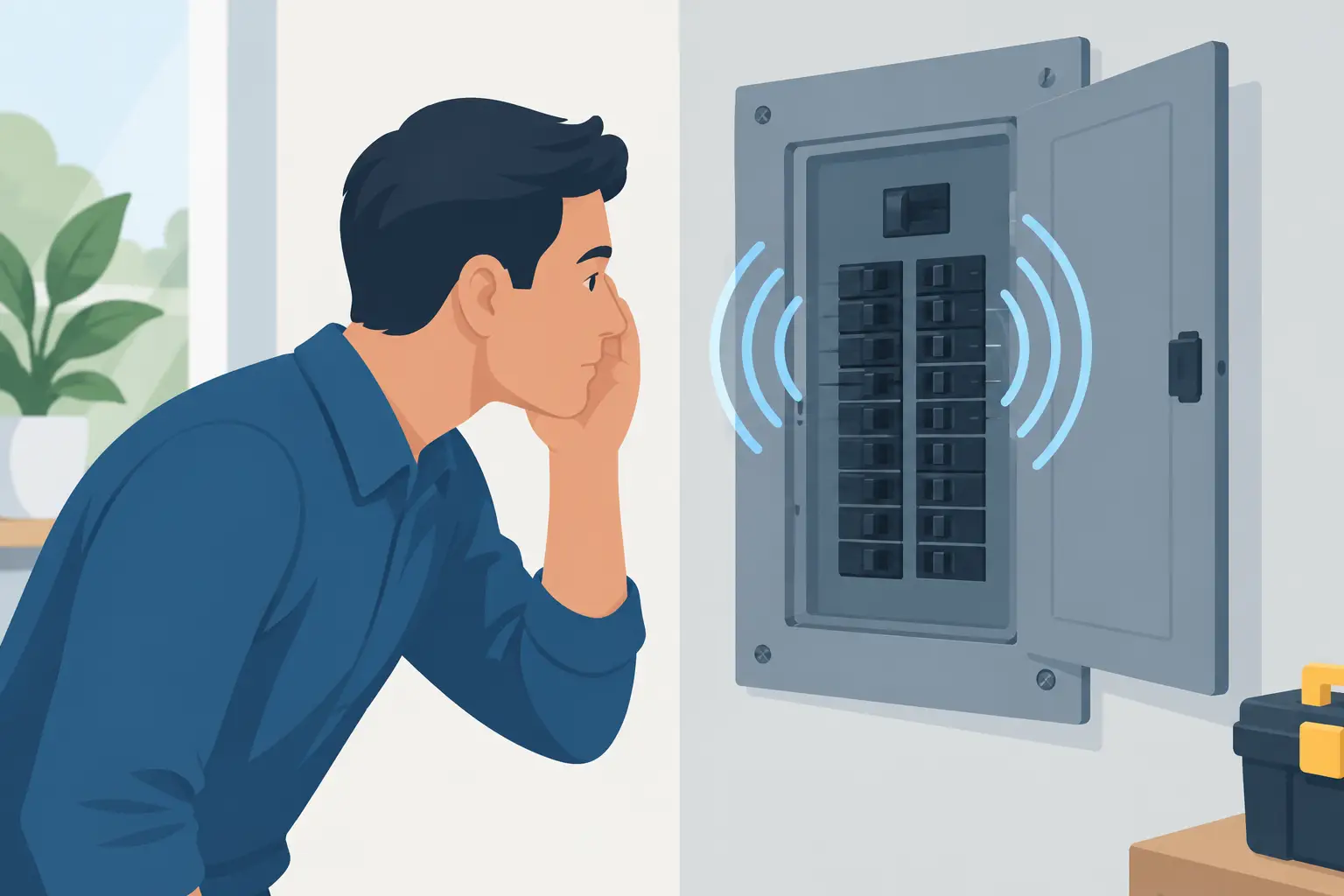
A problem isolated to one fixture may involve the bulb, trim, socket, switch, dimmer, or fixture wiring. A problem affecting several lights on the same circuit may point to an overloaded circuit, weak connection, or issue at a junction box. Flickering throughout the property can indicate a more serious concern at the electrical panel, meter base, service conductors, or utility connection.
For homeowners and facility managers, the most useful information is simple: which lights are affected, when the flickering begins, what equipment is operating, and whether breakers trip or outlets feel warm. This gives the electrician a clearer diagnostic starting point without asking anyone on site to work around energized wiring.
Common Causes of Flickering Lights
Loose bulbs, incompatible lamps, and failing fixtures
LED bulbs can flicker when they are not fully seated, are nearing failure, or are paired with an incompatible dimmer. Older dimmers were often designed for incandescent loads and may not regulate low-wattage LED lamps correctly. In that case, the repair may be as straightforward as installing a compatible LED-rated dimmer and correctly matched bulbs.
Fixture problems can be less visible. A worn lamp holder, damaged internal wiring, loose wire connector, or failing LED driver can interrupt power at the fixture. If a fixture is warm, buzzing, discolored, or intermittently loses power, turn it off and have it evaluated. Repeatedly changing bulbs will not correct a compromised connection.
Circuit overload and voltage drop
A circuit has a defined capacity. When high-demand equipment starts, it can cause a brief voltage drop that is noticeable in nearby lighting. A small, momentary change may occur with certain motors, but repeated or pronounced dimming is not a condition to dismiss.
Overloaded circuits are common where newer loads have been added to older electrical layouts. Portable heaters, window air conditioners, kitchen appliances, workshop equipment, servers, and commercial refrigeration can place sustained demand on circuits that were not designed for them. The correction may require load balancing, a dedicated circuit, conductor repairs, or a panel capacity review. Adding another power strip is not a safe solution.
Loose connections in switches, outlets, or junction boxes
Loose electrical connections are a high-priority diagnostic concern. A connection with poor contact can create resistance and heat, causing lights to flicker as current flow changes. Over time, heat can degrade insulation, damage devices, and create an arc-fault condition.
These issues may occur at a switch, receptacle, fixture box, wire splice, breaker termination, or panel bus connection. Symptoms can include a crackling sound, a burning odor, a warm switch plate, intermittent outlet power, or flickering that changes when a door closes or a wall is bumped. Do not tighten or investigate wiring inside a live panel or junction box. De-energizing, testing, torque verification, and repair should be performed by qualified personnel.
Panel, service, or utility-side faults
When lights flicker in several rooms or across an entire commercial space, the problem may extend beyond a branch circuit. A deteriorated breaker, loose neutral conductor, damaged service equipment, corroded meter connection, or utility supply issue can create unstable voltage.
A loose neutral is especially serious because it can cause uneven voltage between circuits. Some lights may become unusually bright while others dim. Electronics, appliances, HVAC controls, and business equipment can be damaged under these conditions. If multiple lights are brightening and dimming, or if the issue occurs throughout the property, treat it as an urgent electrical concern.
Outdoor weather can also expose service-side weaknesses. Wind, rain, temperature changes, and storm damage may affect overhead service connections or utility equipment. An electrician can determine whether the fault is on customer-owned equipment or requires utility involvement.
When Flickering Lights Require Immediate Action
Turn off the affected circuit if it can be done safely and request professional service promptly when flickering is accompanied by heat, odor, sound, or visible damage. The same applies when a breaker trips repeatedly, outlets lose power intermittently, or lights change brightness across more than one room.
Emergency evaluation is warranted if you notice smoke, sparking, a burning-plastic smell, a hot electrical panel, or severe whole-property voltage fluctuations. Keep people away from the affected equipment. Do not reset a tripped breaker repeatedly, remove a panel cover, or touch damaged service equipment.
For commercial properties, unstable lighting may be an early warning before equipment downtime or a failed safety inspection. Facilities with refrigeration, production equipment, IT systems, emergency lighting, or tenant spaces should document the time, affected areas, and operating conditions. That record supports faster diagnosis and helps limit disruption.
How a Licensed Electrician Diagnoses the Problem
A proper diagnosis goes beyond replacing a bulb and waiting to see whether the issue returns. The electrician begins by identifying the affected circuit or service area, then checks load behavior, device condition, conductor terminations, grounding and neutral integrity, breaker performance, and voltage stability.
Testing may include voltage measurements under load, inspection of fixtures and switches, examination of panel connections, and verification of circuit capacity. In a commercial setting, the scope can also include distribution equipment, disconnects, lighting controls, emergency systems, and power-quality concerns. The repair should address the cause, not merely the symptom.
Code compliance matters during this process. Older homes and buildings may contain outdated devices, undersized circuits, damaged wiring methods, or modifications that no longer meet present safety standards. A documented repair by a licensed contractor provides a clearer record of what was found, what was corrected, and whether further upgrades are recommended.
Preventing Repeat Flickering and Electrical Instability
The right prevention plan depends on the building and the load profile. A newer home with LED dimmer issues may need a targeted fixture or control upgrade. An older property with frequent voltage changes may need panel repairs, dedicated appliance circuits, service equipment work, or a broader electrical safety inspection.
Avoid loading one circuit with multiple high-demand devices. Use permanent wiring and correctly sized dedicated circuits for equipment that runs continuously or draws substantial power. In commercial spaces, account for expansion before adding equipment, workstations, signage, or HVAC loads. Capacity planning is less disruptive and less expensive than responding after breakers trip or equipment is damaged.
Routine inspections are also valuable where electrical systems are aging, buildings have changed use, or operations cannot tolerate downtime. For property owners in Florence, Muscle Shoals, Tuscumbia, Sheffield, Athens, Decatur, and nearby North Alabama communities, M&S Electric provides licensed diagnostics and code-focused electrical repairs under Alabama License AL #09426.
Flickering lights are a useful warning signal when they are treated early. Record the pattern, avoid temporary workarounds, and arrange a professional evaluation before an intermittent issue becomes a heat, fire, equipment, or outage problem.


Comments