
EV Charging: Plan a Safe Home or Business Install

A new EV can expose electrical limits that were easy to overlook when a home or facility was built. The vehicle may be ready for overnight charging, but the panel, feeder, branch circuit, grounding system, and available capacity must be ready too. Safe EV charging starts with a documented assessment of the electrical system, not with selecting the fastest charger advertised online.
For homeowners, the goal is dependable daily charging without overloading existing equipment or creating a fire risk. For businesses and property managers, the decision also affects tenant expectations, parking design, operational continuity, utility demand, accessibility, and future expansion. In both cases, licensed installation and code-based planning protect the property long after the charger is mounted.
EV Charging Begins With Electrical Capacity
An EV charger is a significant continuous electrical load. Unlike a toaster or power tool that runs briefly, vehicle charging can operate for hours. That changes how the circuit and service capacity must be evaluated.
A qualified electrician begins by identifying the property’s service size, panel rating, existing loads, available breaker space, feeder condition, and the condition of the grounding and bonding system. A panel may have an open breaker position while still lacking sufficient calculated capacity for a new charger. Conversely, a panel that appears crowded may be serviceable after a proper load calculation, equipment review, or a planned upgrade.
The National Electrical Code treats EV charging equipment as a continuous load. In practical terms, the branch circuit and overcurrent protection must be sized to support sustained operation under applicable code requirements and the charger manufacturer’s instructions. This is not a place to estimate based on the receptacle shape or the charger’s plug alone.
Older homes deserve additional attention. Aluminum branch wiring, deteriorated panel components, undersized services, double-tapped breakers, uncorrected grounding issues, and previous unpermitted work can all affect whether an installation is appropriate. Installing a charger without addressing those conditions can place more stress on an already compromised system.
Choosing the Right EV Charging Level
Charging equipment should match how the vehicle is used and what the electrical system can safely support. Faster is not automatically better if it requires costly infrastructure changes that do not serve the owner’s actual driving pattern.
Level 1 charging
Level 1 charging uses a standard 120-volt connection and is typically the slowest option. It can be practical for drivers with short daily mileage, long overnight parking windows, and a dedicated, properly maintained circuit. It should not be treated as permission to use a worn receptacle, an overloaded garage circuit, or an extension cord.
Even with Level 1 equipment, heat at the receptacle or plug, repeated breaker trips, flickering lights, and damaged cord insulation are warning signs. Stop charging and have the circuit evaluated if those conditions appear.
Level 2 charging
Level 2 equipment operates on 240 volts and is the common choice for homes, workplaces, multifamily properties, and fleet parking. It can provide substantially more charging capacity, but it usually requires a dedicated branch circuit and a careful load calculation.
Level 2 equipment may be hardwired or cord-and-plug connected, depending on the equipment listing, location, local requirements, and installation design. Hardwired units can reduce one connection point and may support higher charging output, while receptacle-based installations can offer equipment replacement flexibility. The correct choice depends on the property, the equipment specifications, and the authority having jurisdiction.
DC fast charging
DC fast charging is primarily a commercial infrastructure project. It may require substantial service capacity, distribution upgrades, utility coordination, engineered site planning, protective equipment, communications capability, and careful consideration of demand charges. A business considering public or fleet fast charging should start with a feasibility assessment rather than assuming existing building power can support the equipment.
What a Code-Compliant Installation Should Address
A charger installation is more than a new breaker and a length of cable. It is an electrical system addition that must be designed around the actual installation environment.
The charger should be listed for its intended use and installed according to its manufacturer instructions. The dedicated circuit must use properly rated conductors, overcurrent protection, raceways or cable methods, and terminations. Equipment location matters as well. Indoor garages, exterior walls, parking structures, wet locations, vehicle impact zones, and public-access areas each create different protection and mounting considerations.
Ground-fault protection requirements, disconnecting means, receptacle configuration, working clearances, surge protection considerations, and labeling must be evaluated under the adopted code and local rules. Requirements can differ by jurisdiction and equipment type, which is why a licensed local contractor should verify the applicable standards before work begins.
Permitting and inspection are not administrative extras. They provide an independent check that the installation has been evaluated for safety and compliance. For commercial properties, documented permits, inspection records, load calculations, panel schedules, and equipment data also create a clearer maintenance record for future facility teams, insurers, tenants, and buyers.
When a Panel Upgrade Is the Right Decision
A panel upgrade is not required for every EV charger, but it becomes necessary when the existing equipment cannot safely support the added load or no longer meets the property’s operational needs. The decision should be based on a calculation and equipment condition assessment, not on a rule of thumb.
Signs that an upgrade may be warranted include a service that is fully loaded, obsolete or damaged panel equipment, insufficient physical space for a dedicated circuit, recurring breaker problems, evidence of overheating, or planned additions such as electric HVAC, a heat pump water heater, induction cooking, a workshop, or solar equipment. These loads compound quickly.
For a homeowner, a panel upgrade can turn an isolated charging project into a broader safety and performance improvement. For a facility manager, upgrading distribution may be the first phase of a scalable EV charging plan. Installing conduit pathways, reserving panel capacity, and planning parking locations early can reduce disruption and cost when more chargers are added later.
Commercial EV Charging Requires Site Planning
Businesses often focus first on the charger count. The better first question is how charging will affect the site.
Parking layout determines cable reach, bollard needs, ADA considerations, traffic flow, snow and water exposure, and vehicle impact risk. Electrical routing affects trenching, pavement restoration, landscaping, building penetrations, and access for future maintenance. The utility may need to review transformer capacity or service upgrades before equipment is ordered.
Operating strategy also matters. Employee charging, customer charging, multifamily resident charging, and fleet charging have different load patterns. Managed charging systems can help control when vehicles draw power, which may reduce peak demand and allow available infrastructure to serve more vehicles. However, networked equipment adds communications, software, account administration, and long-term vendor support considerations.
A phased design is often the most disciplined approach. Install the infrastructure needed for future expansion where practical, then deploy chargers in quantities that match current demand and available capacity. This avoids both underbuilding and spending heavily on equipment that remains unused.
Avoid These EV Charging Shortcuts
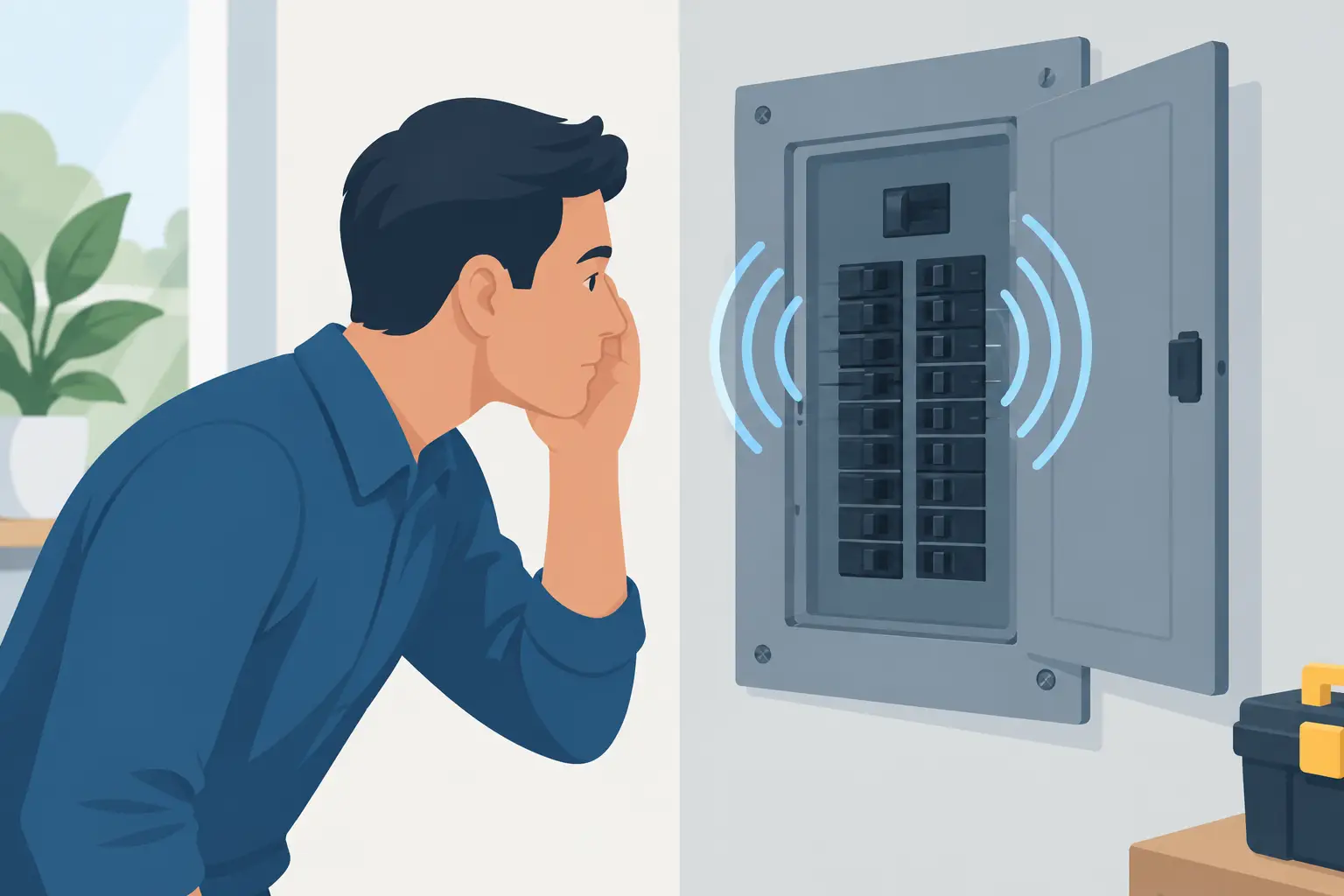
The most common risks come from treating EV charging like a temporary appliance connection. Do not rely on extension cords, adapter chains, damaged receptacles, shared circuits, or improvised outdoor connections. Do not continue charging through a hot plug, persistent breaker trip, burning odor, discoloration, or buzzing electrical equipment.
A charger should never be installed by simply selecting the largest breaker that fits the panel. Oversizing overcurrent protection relative to conductors or equipment ratings can defeat the protection the circuit is supposed to provide. Likewise, replacing a tripping breaker without diagnosing why it is tripping can conceal an overload, loose termination, equipment fault, or wiring defect.
If charging will occur outdoors, use equipment and wiring methods suitable for the location and protect the installation from physical damage. In North Alabama, seasonal heat, rain, humidity, and storm activity make proper enclosure ratings, mounting, grounding, and surge protection planning especially relevant.
Build Charging Around Long-Term Electrical Safety
A properly planned charger should feel uneventful: the vehicle charges reliably, the electrical system remains stable, and the installation has records that demonstrate how and why it was built. That result comes from evaluating capacity before adding load, using listed equipment, following applicable NEC and local requirements, and correcting underlying electrical deficiencies instead of working around them.
If your home or business is considering EV charging, begin with a professional electrical assessment. The right installation protects the people using the property, supports the way vehicles are actually driven, and gives the electrical system room to perform safely for years ahead.


Comments