
How to Identify Overloaded Circuits Safely

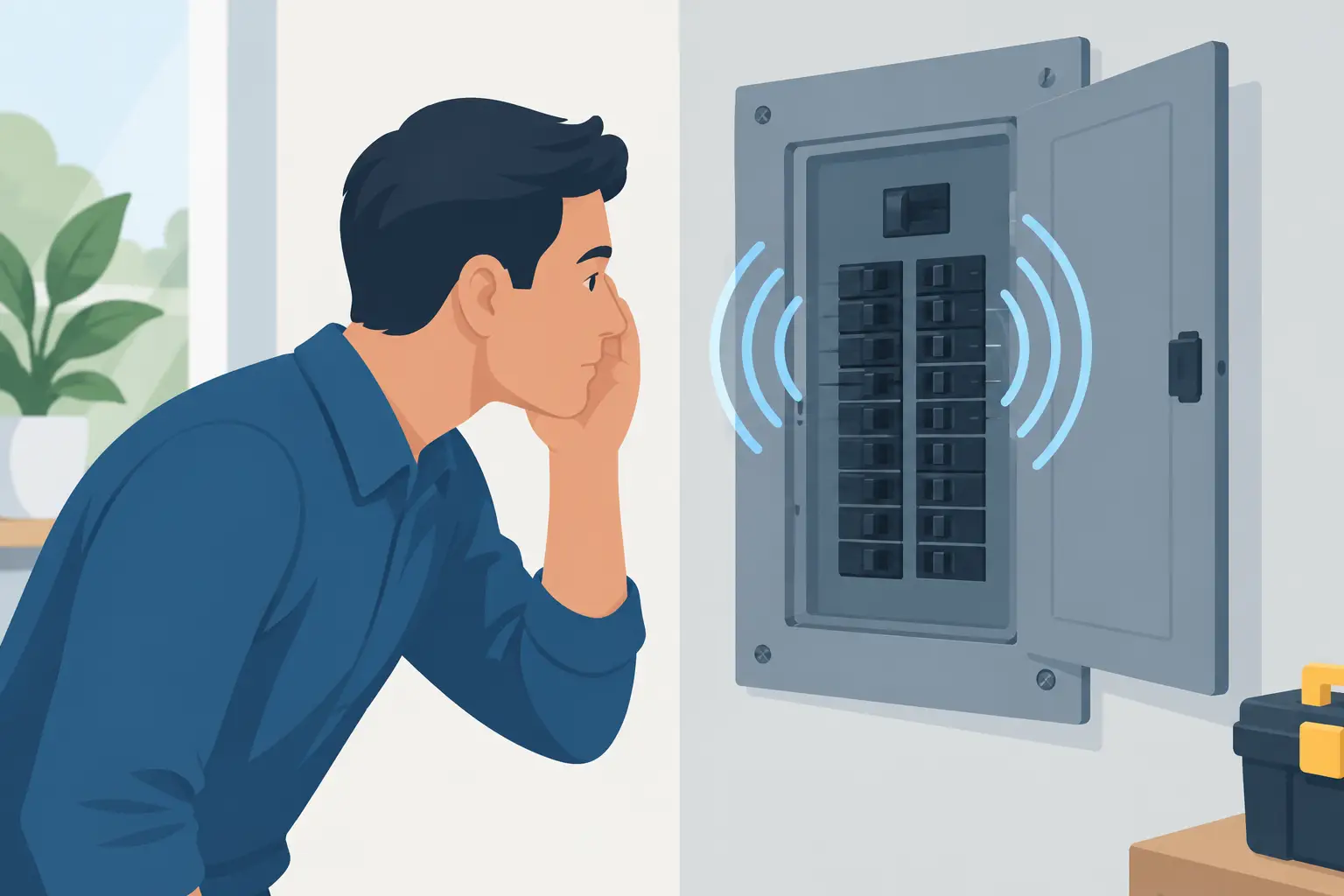
A breaker that trips once after a storm or a major appliance starts is not automatically an overloaded circuit. A breaker that repeatedly trips when normal equipment is running is a different matter. Repeated interruptions, hot outlets, and flickering lights are electrical system warnings that deserve a disciplined response, not a larger breaker or another extension cord.
Knowing how to identify overloaded circuits helps homeowners, property managers, and business owners address a developing hazard before it causes equipment damage, service disruption, or fire risk. The goal is not to diagnose a panel from behind its cover. It is to recognize the signs, reduce the load safely, and bring in a licensed electrician when the circuit needs testing, repair, or redesign.
What an overloaded circuit actually means
A circuit is designed to supply a limited amount of electrical current. In most homes, branch circuits are protected by 15-amp or 20-amp breakers. The breaker is intended to open when current exceeds safe operating limits long enough to create a risk of overheating.
An overload occurs when the connected equipment demands more current than the circuit can safely deliver. A kitchen circuit, for example, may be asked to run a microwave, toaster oven, coffee maker, and air fryer at the same time. In an office or retail space, the same issue can develop when plug-in heaters, printers, monitors, chargers, and other equipment accumulate on a single branch circuit.
Not every electrical problem is an overload. Loose connections, damaged wiring, faulty appliances, ground faults, and arc faults can produce similar symptoms. That distinction matters because a breaker that trips is performing a protective function. Resetting it repeatedly without finding the cause can allow a serious fault to continue.
How to identify overloaded circuits: the primary signs
The clearest indicator is a breaker that trips after specific equipment is switched on or after several items operate together. Pay attention to the pattern. If the breaker holds when only lights are on but trips when a space heater, vacuum, microwave, or portable air conditioner is added, excessive load is likely.
Other warning signs require prompt attention because they may indicate overloads or another wiring defect:
A breaker trips repeatedly, especially during ordinary use of the room or equipment it serves.
Lights dim or flicker when a high-demand appliance starts.
Receptacles, plugs, switches, or cover plates feel warm to the touch.
Outlets show discoloration, melting, cracking, or scorch marks.
You hear buzzing, popping, or crackling, or notice a burning odor near an outlet, panel, cord, or appliance.
Warmth, odor, visible damage, and unusual sound should never be treated as routine overload symptoms. Stop using the affected circuit if it can be done safely, unplug accessible equipment, and arrange professional service. If there is smoke, active sparking, or fire, move people away from the area and call emergency services.
Check the load without opening the electrical panel
Property owners can make useful observations without removing a panel cover, touching wiring, or performing live electrical tests. Start at the breaker directory. If it is labeled clearly, identify the rooms, outlets, or equipment on the circuit that has tripped. A poorly labeled or incomplete directory is itself a reason to schedule an inspection, particularly in older homes and remodeled commercial spaces.
After a breaker trips, turn off or unplug the devices that were operating on that circuit. Reset the breaker once. Then restore loads one at a time, allowing each appliance to operate before adding another. If the breaker trips only after several devices are running, the combined demand is likely beyond the circuit's capacity.
This process is useful for observation, not repair. Do not hold a breaker in the on position, tape it, replace it with a higher-rated breaker, or reset it repeatedly. A larger breaker does not add capacity to existing wiring. If the conductor, receptacle, or connection is not rated for the increased protection level, overheating can occur before the breaker opens.
Also look for extension cords and multi-outlet power strips that have become permanent infrastructure. One quality surge protector may be appropriate for low-demand electronics, but it does not increase the capacity of the wall circuit. Portable heaters, microwaves, refrigerators, air conditioners, and other high-wattage equipment should generally be connected directly to a properly rated receptacle, not to power strips or undersized extension cords.
Understand the 80 percent rule for continuous loads
Circuit ratings can be misleading when they are treated as usable capacity for every type of load. A 15-amp, 120-volt circuit has a theoretical maximum of 1,800 watts, while a 20-amp circuit has a theoretical maximum of 2,400 watts. However, equipment expected to run continuously for three hours or more is generally calculated at no more than 80 percent of the circuit rating under National Electrical Code load-sizing requirements.
That means a continuous load on a 15-amp circuit is commonly limited to about 1,440 watts, and a continuous load on a 20-amp circuit to about 1,920 watts. Lighting, server equipment, display systems, ventilation equipment, and long-running heating loads can make this calculation relevant in both residential and commercial settings.
Actual capacity depends on the circuit design, conductor size, breaker type, connected equipment, and applicable code requirements. Wattage labels can help identify obvious conflicts, but they do not replace a proper load calculation. A licensed electrician can determine whether the issue is simple circuit congestion, undersized infrastructure, defective equipment, or a condition that requires immediate correction.
When an overloaded circuit points to a larger problem
A single overloaded outlet area may be resolved by moving low-demand equipment to another circuit or changing how appliances are used. But frequent overloading often indicates that the electrical system no longer matches the property.
Homes with added appliances, garage workshops, renovated kitchens, home offices, EV charging equipment, or finished basements may need additional dedicated circuits. Older properties may also have limited receptacle access, outdated panels, or wiring conditions that require a more complete evaluation.
For businesses and facilities, repeated breaker trips can affect more than convenience. They can interrupt point-of-sale systems, refrigeration, computers, production equipment, lighting, and safety systems. A proper commercial assessment considers connected load, demand, dedicated equipment requirements, panel capacity, load balancing, and documentation needed for maintenance and compliance planning.
An electrician may recommend a new dedicated branch circuit, receptacle upgrades, panel repairs, a panel upgrade, or redistribution of existing loads. The correct solution depends on what testing reveals. Adding circuits can improve performance, but it is only appropriate if the panel and service have adequate capacity to support them.
Know when to request immediate service
Schedule a professional inspection when a breaker trips more than once, even if you believe you know which appliance caused it. Request urgent electrical service if a breaker will not reset, an outlet is hot or damaged, a burning smell is present, or lights behave erratically on a circuit with no obvious load change.
Do not wait for a failed inspection, damaged appliance, or power loss to address persistent breaker issues. In North Alabama, M&S Electric provides licensed diagnosis built around NEC-based safety practices, code-compliant repairs, and clear documentation of the condition found.
A breaker is not an inconvenience to work around. It is a protective device signaling that the circuit needs less demand, better distribution, or professional attention. Treat that signal early, and the electrical system can continue to support the property with the stability and safety it was designed to provide.


Comments