Outlet Odor Causes You Should Never Ignore

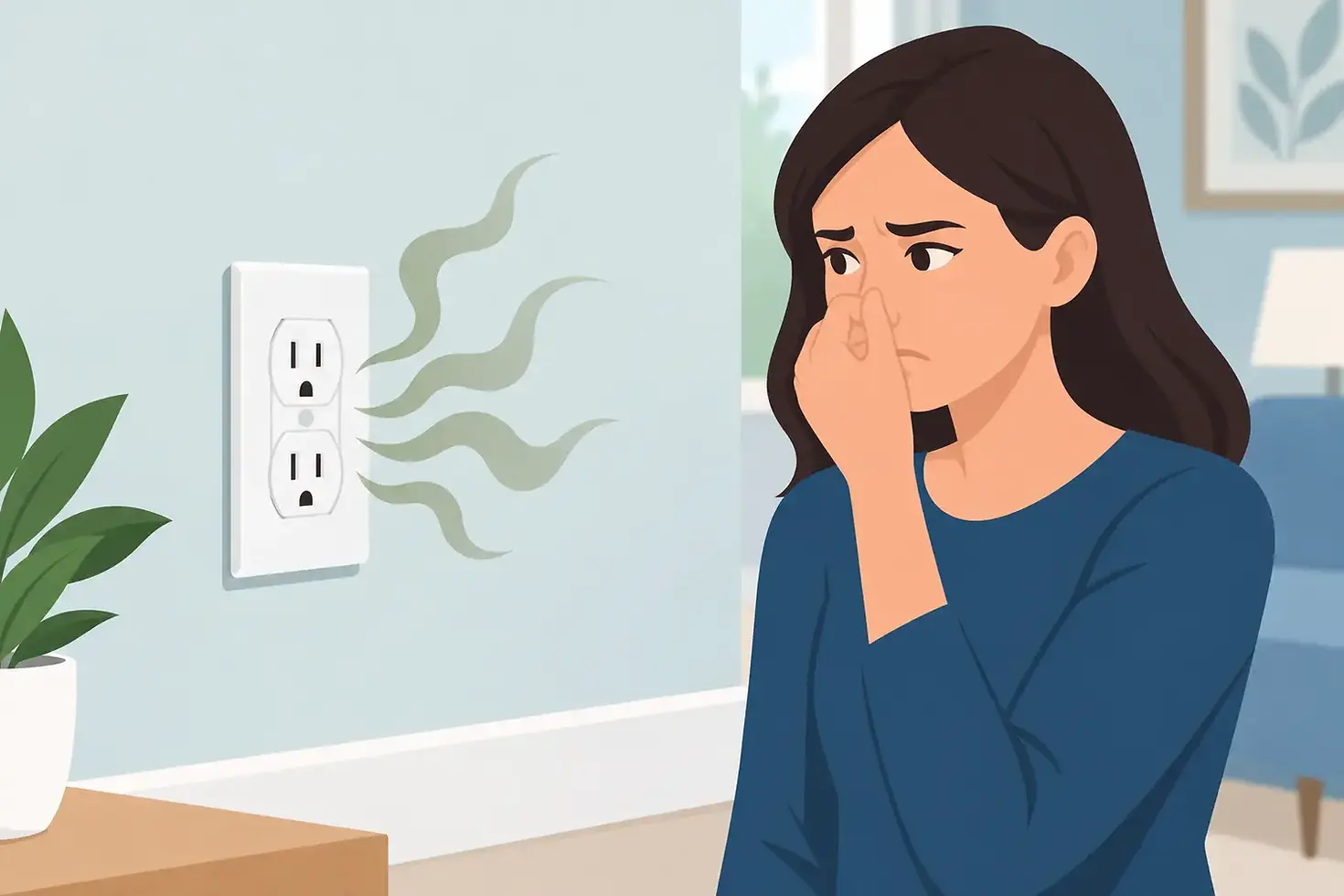
A wall outlet should not produce a noticeable odor. When it does, the smell is often an early warning that heat, damaged insulation, arcing, or contamination is affecting part of the electrical system. Outlet odor causes can range from a minor external issue to an active fire hazard, so the correct response is not to mask the smell or keep testing the receptacle. Treat the outlet as a safety concern until its condition is verified.
For homeowners, property managers, and business operators, the first priority is simple: stop using the outlet. Unplug connected equipment if it can be done without touching a hot, damaged, or discolored receptacle. If there is smoke, sparking, crackling, heat, or a strong burning smell, turn off power at the panel only if it is safe to do so and request emergency electrical service.
Common Outlet Odor Causes
The odor itself can provide useful information, but it cannot confirm the source of the failure. Electrical faults may be hidden behind the wall, inside the outlet box, at a wire connection, or within the device plugged into the receptacle. A licensed electrician should inspect the circuit rather than replacing an outlet cover and assuming the problem is resolved.
Overheating from a loose electrical connection
Loose connections are among the most serious and common causes of a burning-plastic or hot-electrical smell. Electricity moving through a loose terminal, worn contact, damaged splice, or improperly secured wire creates resistance. That resistance creates heat.
As heat builds, it can degrade wire insulation, discolor the receptacle body, and damage the outlet box. In some cases, the connection begins arcing - electricity jumps across a gap instead of traveling through a secure conductor. Arcing can create a sharp, acrid odor and may leave dark marks around outlet slots or terminals.
This condition is not a do-it-yourself tightening task. The visible outlet may not be the only affected component, and an incorrect repair can leave concealed damage in place. A proper diagnosis includes checking the receptacle, wiring terminations, circuit load, grounding, and related connections.
Overloaded outlets, power strips, or circuits
An outlet can smell hot when too much equipment is drawing power through one receptacle or branch circuit. Space heaters, portable air conditioners, microwaves, toaster ovens, hair tools, shop equipment, and commercial appliances can place substantial demand on wiring. Extension cords and power strips add another potential weak point, particularly when they are undersized, worn, or used as permanent wiring.
A breaker that has not tripped does not prove the setup is safe. A circuit may be within the breaker’s rating while a damaged outlet, loose plug, power strip, or connection overheats locally. Repeated use of high-wattage equipment on a shared circuit can also accelerate wear.
The practical fix depends on the load and the facility. A homeowner may need a dedicated circuit for an appliance. A business may need circuit redistribution, additional receptacles, or a panel and infrastructure evaluation to support equipment without overloading existing capacity.
A failing appliance or damaged plug
Sometimes the outlet is not the origin of the odor. A failing appliance, charger, lamp, extension cord, or power strip can overheat at its plug connection and transfer heat into the receptacle. Inspect from a safe distance for melting, cracking, discoloration, bent blades, or a plug that feels unusually warm. Do not reuse that device on another outlet to “see if it works.”
If the odor stops after an item is unplugged, the item may be the immediate cause, but the outlet should still be examined if there was heat, visible damage, or a persistent smell. Heat can weaken the receptacle contacts and create a future failure point.
Moisture, contamination, and pests
Bathrooms, kitchens, laundry rooms, garages, crawlspaces, and exterior locations face higher exposure to moisture and contaminants. Water intrusion can corrode terminals, compromise insulation, and create tracking paths for electrical current. Dust, grease, insect activity, and rodent nesting materials can also heat up or burn when they contact energized components.
A musty odor is not always an electrical fault, but it should not be dismissed when it is coming from an outlet near plumbing, exterior walls, or a known moisture source. The repair may require both electrical correction and investigation of the water entry point. Replacing a receptacle without addressing moisture can repeat the failure.
Aging, damaged, or improperly installed wiring
Older buildings may contain worn receptacles, degraded insulation, undersized circuits, or wiring methods that do not meet modern safety expectations. Newer properties are not immune. Improper terminations, backstabbed connections that have loosened over time, overloaded additions, and unpermitted modifications can all create odor-producing heat.
Commercial properties may experience similar issues around high-use workstations, break rooms, equipment rooms, tenant build-outs, and areas where loads have changed without corresponding electrical upgrades. An outlet that smells intermittently can be especially difficult to diagnose because the fault may occur only under load. Documentation of when the odor appears and what equipment was running helps isolate the problem.
What Different Electrical Smells Can Indicate
A burning-plastic smell commonly points to overheated insulation, a receptacle body, a plug, or an appliance component. A sharp smell similar to burning dust may occur when a heater or appliance is first used after storage, but it should be brief and should not originate from the outlet itself.
An acrid, fish-like, or ozone-like smell deserves urgent attention. These odors can be associated with overheating electrical components or arcing. A smoky smell, especially with visible discoloration or warmth, should be treated as an active hazard. Turn off the affected circuit if conditions allow, keep people away from the area, and contact a licensed electrician. If fire or smoke is present, leave the building and call emergency services.
Odor identification is useful, but it is not a diagnostic method by itself. Materials smell different as they overheat, and multiple faults can create similar odors. Electrical testing and visual inspection are necessary to establish the actual failure mechanism.
When an Outlet Odor Requires Immediate Action
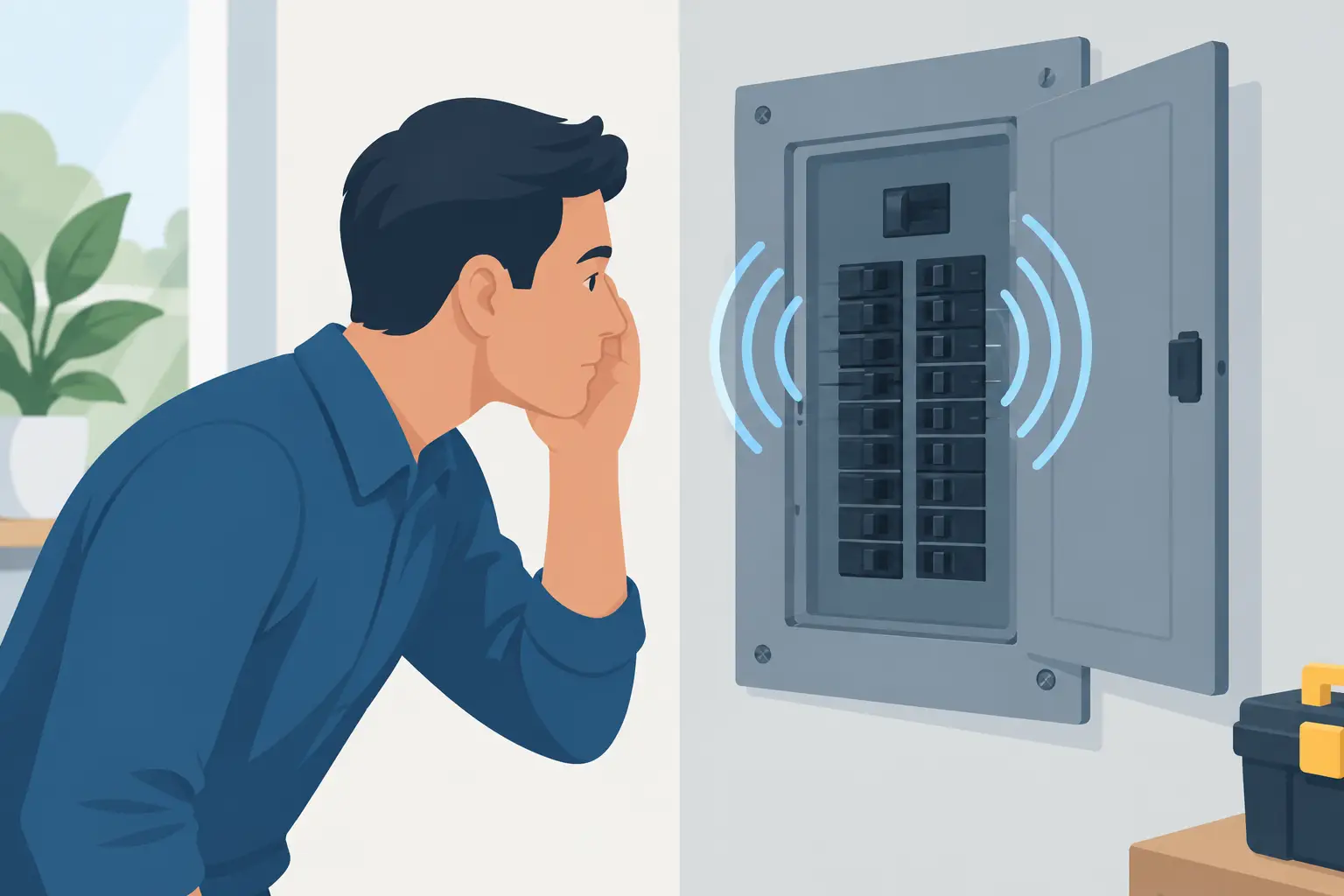
Any persistent outlet smell warrants professional evaluation, but several conditions raise the urgency. Do not continue using the circuit if you notice a hot faceplate, buzzing or crackling, flickering connected lights, loose plugs, black or brown staining, melted plastic, repeated breaker trips, or smoke.
Avoid removing the outlet cover while power is on. Do not spray air freshener, cleaner, water, or fire suppressant directly into the receptacle. Do not cover the outlet with furniture or tape over it. These actions can conceal evidence, increase heat retention, or introduce additional hazards.
If a breaker trips after an outlet smells hot, leave it off. Resetting it repeatedly can energize a damaged circuit and increase the chance of arcing. A breaker is a protective device, not a signal that a fault has corrected itself.
What a Professional Electrical Inspection Should Verify
A safety-focused inspection goes beyond checking whether the receptacle has power. The electrician should evaluate the condition of the outlet, plug contact tension, terminal connections, wire insulation, grounding path, box fill, circuit loading, breaker compatibility, and evidence of heat or arcing. Depending on the symptoms, testing may extend to upstream and downstream devices on the same circuit.
For properties in North Alabama, the work should also be evaluated against applicable National Electrical Code requirements and local conditions. Ground-fault protection, arc-fault protection, weather-resistant devices, dedicated circuits, and properly rated equipment are not interchangeable solutions. The correct correction depends on the location, the circuit design, and the source of the failure.
M&S Electric provides licensed diagnostic and emergency electrical service for outlet failures, circuit concerns, and safety-related repairs across the Tennessee Valley. The goal is not merely to restore power. It is to identify the condition that created the odor, correct it to code, and verify that the repaired system can operate safely under normal load.
An outlet odor is often the electrical system giving you notice before a small defect becomes equipment damage, a failed inspection, or a fire event. Remove the load, control the power when safe, and have the circuit assessed before putting it back into service.


Comments