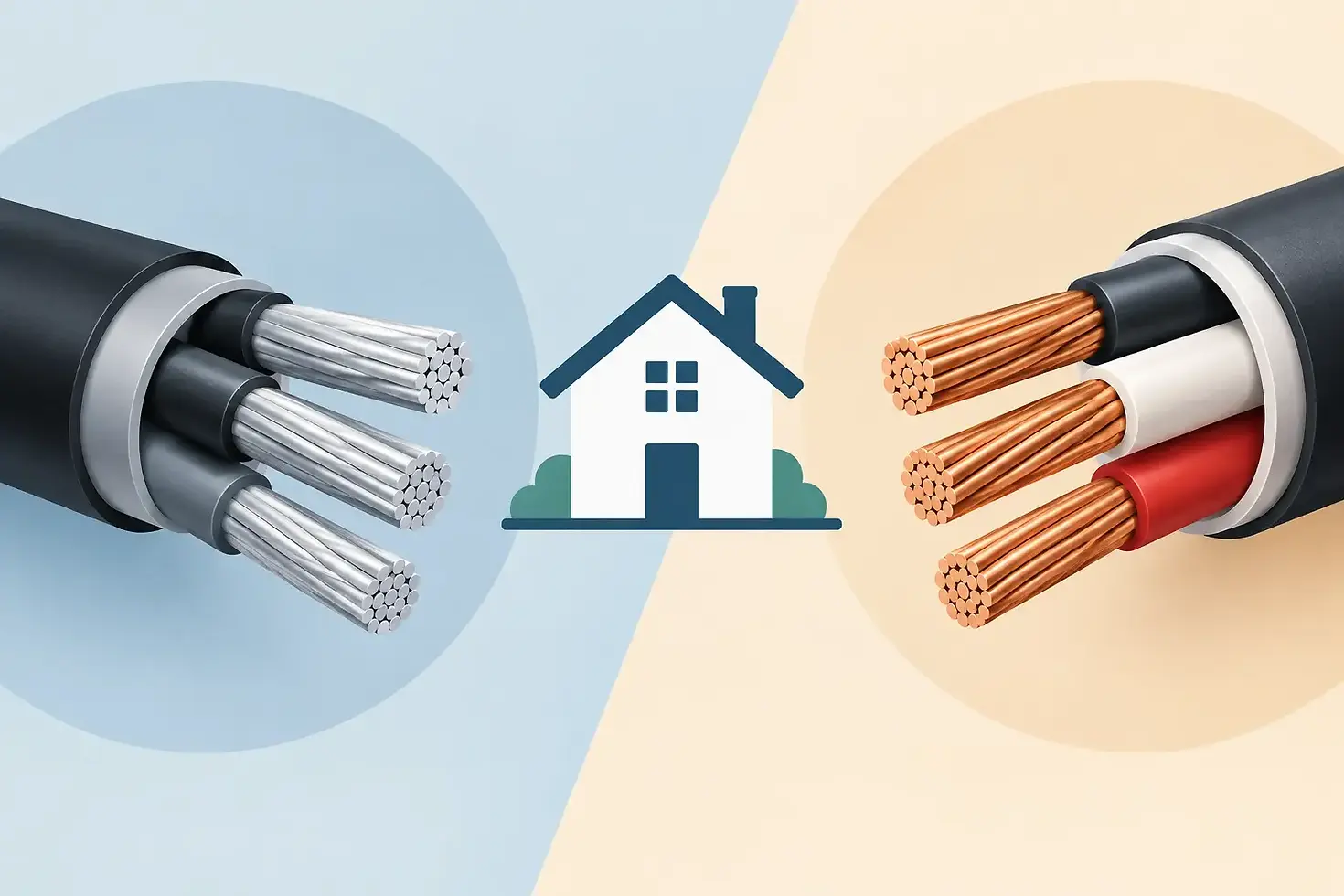
Aluminum Versus Copper Home Wiring Compared

A home can appear electrically normal while a hidden connection is operating too hot. That is the central concern in aluminum versus copper home wiring: the issue is not simply which metal carries electricity better. It is whether the conductors, terminals, splices, breakers, and installation methods work together safely under real household loads.
Copper remains the standard for most residential branch circuits, while aluminum is widely used and appropriate for certain larger feeders and service conductors when correctly sized and terminated. Older aluminum branch-circuit wiring deserves closer attention because its connection requirements differ from copper and its history includes installation practices that can create fire hazards today.
Aluminum Versus Copper Home Wiring: The Core Difference
Copper is an excellent electrical conductor, mechanically durable, and relatively stable at electrical terminations. It has long been the familiar choice for the smaller branch circuits that supply receptacles, lights, and many appliances throughout a house.
Aluminum conducts electricity effectively but not as efficiently as copper at the same wire size. For equivalent current capacity, aluminum conductors generally need to be larger. Aluminum is also softer, expands and contracts more with temperature changes, and forms an oxide layer that can interfere with a poor connection. None of these characteristics make aluminum inherently unsafe. They make correct design, listed components, proper torque, and qualified installation non-negotiable.
Modern electrical systems regularly use aluminum for service entrance conductors, large feeders, and some commercial applications. Those conductors are selected, sized, and installed under current National Electrical Code requirements using equipment listed for aluminum use. The greater concern in residential inspections is usually older, smaller-gauge aluminum branch wiring installed in many homes during portions of the 1960s and 1970s.
Why Older Aluminum Branch Wiring Requires Attention
When current flows through any connection, resistance creates heat. A loose, damaged, corroded, or improperly matched termination raises resistance and can raise heat significantly. With older aluminum branch wiring, repeated heating and cooling may contribute to movement at terminations over time. If an outlet, switch, splice, breaker, or connector was not designed for aluminum conductors, the risk increases.
This does not mean every house with aluminum wiring is an emergency or requires a complete rewire. Condition, installation history, circuit loading, device compatibility, and the quality of every accessible connection matter. However, it does mean the system should not be evaluated by appearance alone. A wall outlet may look intact while the connection behind it has loosened, discolored, or overheated.
Homeowners should be especially cautious about do-it-yourself device replacement. Installing a new receptacle or switch on an aluminum-wired circuit without confirming conductor compatibility, correct preparation, and termination requirements can create a hazard at the exact point where the work was intended to improve the home.
Warning Signs That Call for Prompt Service
Electrical warning signs require professional diagnosis whether a home has aluminum or copper wiring. In a home with known or suspected aluminum branch circuits, these conditions deserve immediate attention: warm or discolored outlets and switches, flickering lights, a burning odor, frequent breaker trips, buzzing at devices, or outlets that work intermittently.
Do not continue resetting a breaker or using a questionable receptacle while waiting for an answer. Turn off power to the affected circuit if it can be done safely, avoid touching damaged equipment, and request qualified electrical service. Heat damage at a connection can progress inside a wall or electrical box where it is not visible.
Copper Wiring: Advantages and Limits
Copper branch wiring offers strong conductivity in a compact conductor size and performs reliably with standard residential equipment when installed correctly. It is easier for many electricians and homeowners to identify because most common residential switches, receptacles, and connectors are designed around copper conductors.
That familiarity does not make copper wiring maintenance-free. Loose copper connections, overloaded circuits, damaged insulation, undersized conductors, failed breakers, and improper splices can still cause overheating and electrical fires. A copper system should be judged by its present condition, circuit capacity, panel condition, grounding and bonding, and compliance with the standards applicable to the work performed.
Copper also costs more than aluminum, particularly on large projects. For service upgrades and feeder installations, appropriately sized aluminum conductors can provide a code-compliant, cost-conscious solution when matched with listed lugs, breakers, and equipment. The correct choice is based on the application, not on a blanket rule that one metal belongs in every part of the system.
When Aluminum Is Appropriate in a Modern Home
A modern electrical installation may use aluminum conductors between the utility meter, service equipment, main panel, subpanel, or a large load. These are typically larger conductors than the branch-circuit wiring that serves standard wall receptacles. Their installation is governed by conductor ampacity, equipment ratings, termination instructions, torque specifications, and applicable NEC requirements.
The key distinction is purpose and execution. Modern aluminum feeder or service conductors installed in listed equipment are not the same situation as legacy aluminum branch wiring connected to aging switches and receptacles. A licensed electrician evaluates the entire path: conductor type and size, insulation condition, panel capacity, terminal ratings, neutral and grounding configuration, breaker condition, and evidence of heat or prior repair.
For a panel replacement or service upgrade, the wiring decision should be made during load calculation and system design. Adding electric vehicle charging, heat pumps, electric ranges, workshops, or other high-demand equipment may require new feeders, panel capacity changes, and circuit upgrades. Material selection is only one part of building a stable, code-compliant electrical system.
Inspection and Repair Options for Aluminum Wiring
A professional assessment begins with verification. Records, visible conductor markings, panel inspection, accessible device checks, and targeted testing help determine whether a home contains aluminum branch circuits and where risks may exist. The scope should account for additions, renovations, prior repairs, and mixed wiring methods. Many older homes have copper in newer areas and aluminum in original sections.
If repairs are needed, the right method depends on the system and the condition found. A full copper rewire can be the most comprehensive option, especially during major renovation or when wiring has widespread damage. It can also be disruptive because walls, ceilings, and finished spaces may need access.
In other cases, a qualified electrician may recommend a recognized remediation method using listed connectors or approved crimp-based repair systems designed for aluminum-to-copper transitions. Device replacement may involve equipment specifically rated for the conductor type, but changing devices alone is not automatically a complete correction. The selected method must match the site conditions, current code requirements, manufacturer instructions, and local inspection expectations.
This is where documentation matters. Property owners should know what was identified, what circuits were addressed, what repair method was used, and whether additional work is recommended. Clear records support future maintenance, real estate disclosures, insurance questions, renovation planning, and safer troubleshooting years later.
What Homeowners Should Do Before Buying or Renovating
If you are buying a home built during the period when aluminum branch wiring was more common, request a focused electrical evaluation rather than relying only on a general visual inspection. Ask whether aluminum branch conductors are present, whether signs of overheating or incompatible devices were found, and what corrective work is recommended.
Before a kitchen remodel, panel upgrade, addition, or high-load equipment installation, have the electrical system assessed early. New loads do not cause defective wiring, but they can expose a weak connection or overloaded circuit. Planning early gives you time to address wiring, capacity, grounding, and permit requirements before walls are closed or project schedules become expensive.
For North Alabama property owners, M&S Electric can assess existing wiring conditions, document findings, and perform licensed repairs or upgrades based on NEC requirements and the conditions present in the building. Electrical safety is not a place for assumptions, especially when the wiring is concealed.
A house does not need to be old to need careful electrical work, and aluminum does not automatically mean failure. What matters is verified conductor use, properly rated equipment, secure terminations, and repairs performed to the standard the system requires. If you have any doubt about what is behind your walls, schedule an inspection before the next loose connection becomes a heat event.


Comments