
Why a Licensed Electrical Contractor Matters

A loose connection behind a wall, an overloaded panel, or an improperly installed circuit can remain hidden until it becomes a fire risk, a costly equipment failure, or a business interruption. A licensed electrical contractor is not simply someone who can make power work. They are responsible for designing, repairing, and verifying electrical systems against recognized safety standards, permit requirements, and the conditions of the property itself.
For homeowners and commercial property decision-makers, licensure provides a clear line of accountability. It means the contractor has met state requirements, carries responsibility for the work performed, and understands how the National Electrical Code (NEC) applies to real installations. That distinction matters when your family, operations, equipment, and insurance exposure depend on a system performing correctly long after the service call ends.
What a Licensed Electrical Contractor Is Qualified to Do
Electrical work is often judged by whether the lights turn on, the outlet works, or the equipment starts. Those are basic outcomes. Professional electrical work must also account for conductor sizing, overcurrent protection, grounding and bonding, panel capacity, load calculations, equipment ratings, access requirements, and local code enforcement.
A licensed contractor evaluates the complete system rather than treating each visible symptom as an isolated problem. If a breaker trips repeatedly, replacing the breaker may not solve the cause. The issue may involve an overloaded circuit, a damaged conductor, a failing appliance, a loose connection, moisture intrusion, or a panel that no longer supports the building's electrical demand.
This broader approach is especially valuable during panel upgrades, renovations, additions, service changes, commercial build-outs, and repairs after storm damage. Each project affects other parts of the electrical system. A properly managed installation considers those relationships before work begins, not after a failure exposes them.
Licensing Creates Verifiable Accountability
In Alabama, electrical contractors are subject to licensing requirements that establish a professional standard beyond general repair experience. A licensed contractor should be able to identify the scope of work, explain applicable requirements, obtain permits when required, coordinate inspections, and provide clear documentation of the completed service.
That documentation has practical value. It helps property owners establish what was repaired or upgraded, supports future maintenance decisions, and can be important during property sales, insurance discussions, tenant improvements, or compliance reviews. For businesses, documented electrical work also supports continuity planning and reduces uncertainty when facilities change hands or expand.
M&S Electric operates under Alabama License AL #09426, bringing this level of responsibility to residential, commercial, maintenance, diagnostic, and emergency work across North Alabama.
Why Code Compliance Is a Safety Requirement
The NEC is not a collection of optional best practices. It is the foundation for reducing electrical shock, fire, and equipment hazards. Municipal requirements may add local rules, but the central goal remains the same: create electrical systems that can operate safely under expected conditions.
Code-compliant work addresses details that may not be visible after installation. It verifies that circuits have appropriate protection, wiring methods are suitable for the environment, boxes are properly sized, grounding paths are effective, and required GFCI and AFCI protections are in place where applicable. It also ensures panels have safe access and that equipment is installed according to its listing and manufacturer requirements.
The correct solution depends on the property. An older home may need a focused repair, a grounding correction, or a service upgrade before adding high-demand equipment. A commercial building may require new distribution capacity, dedicated circuits, emergency systems, or a phased upgrade that keeps critical operations running. There is no responsible one-size-fits-all answer.
Older Systems Require Careful Evaluation
Many Tennessee Valley properties were built for electrical loads that look very different from current demand. Modern homes may add HVAC equipment, induction ranges, EV chargers, workshop tools, home offices, and expanded entertainment systems. Commercial facilities may add computer equipment, specialized machinery, refrigeration, upgraded lighting, or new production capacity.
Older panels and wiring are not automatically unsafe. Their condition, installation quality, load capacity, and service history must be assessed. A licensed professional can identify whether a system needs monitoring, targeted corrections, a panel upgrade, or more extensive modernization.
This is where unqualified work can create a false sense of security. Adding outlets or larger breakers without evaluating the circuit and service capacity can increase risk instead of improving performance. Electrical upgrades should be sized for the actual load and protected according to code.
The Cost of Choosing on Price Alone
Low bids can be attractive when an electrical issue feels urgent. But electrical pricing should be evaluated in terms of scope, materials, diagnostic effort, code requirements, permitting, and warranty responsibility. A quote that appears lower may exclude the steps required to leave the installation safe and inspection-ready.
For example, replacing a damaged receptacle is straightforward when the problem is limited to that device. If the receptacle damage resulted from heat at a loose connection, deteriorated wiring, water exposure, or excessive load, the repair must extend beyond the faceplate. Stopping at the visible failure may allow the underlying condition to continue.
The same principle applies to commercial work. Fast installation is useful only when it does not compromise load planning, labeling, access, shutdown coordination, or code compliance. Downtime has a cost, but so does a failed inspection, damaged equipment, or an electrical event that disrupts operations later.
A qualified contractor should communicate the condition found, the recommended correction, and any options that are genuinely appropriate. That gives the property owner a basis for making an informed decision rather than reacting to a partial diagnosis.
When to Call a Licensed Electrical Contractor
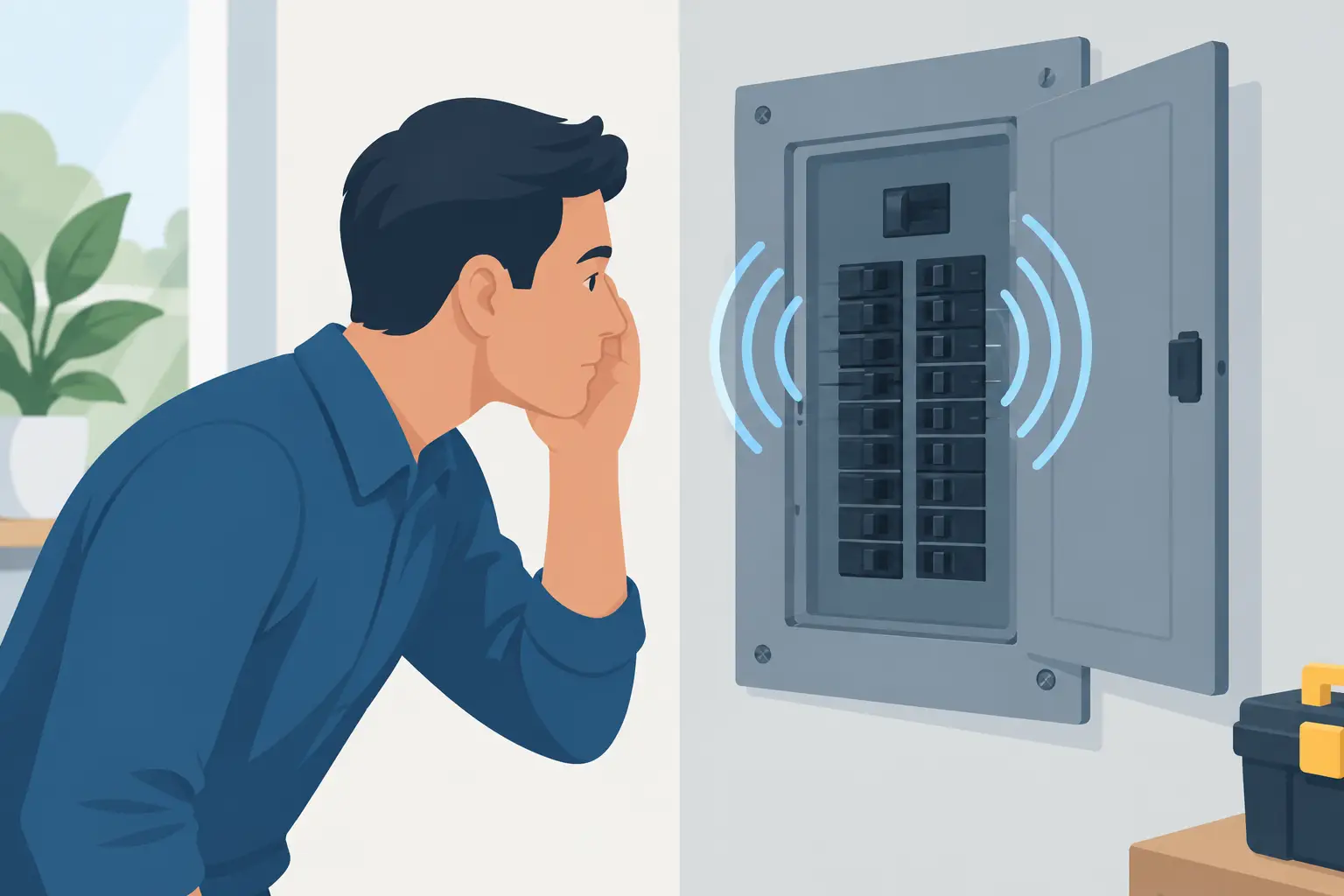
Some electrical conditions should be addressed promptly, even if they appear intermittent. Breakers that trip repeatedly, outlets that feel warm, flickering lights, buzzing panels, burning odors, shocks or tingling at fixtures, discolored outlets, and water near electrical equipment all warrant professional evaluation.
Property owners should also schedule an assessment before major changes. A consultation is appropriate before installing an EV charger, adding a hot tub, finishing a basement, renovating a kitchen, expanding a business, replacing major HVAC equipment, or connecting high-demand machinery. Planning the electrical work early prevents expensive changes after walls are closed or equipment has already been purchased.
For commercial facilities, periodic safety inspections and compliance audits are equally practical. They can identify deteriorated components, overloaded circuits, labeling deficiencies, panel access issues, and installation conditions that may affect safety or inspection readiness. Preventive work is often less disruptive than emergency repair because it can be scheduled around operations.
What to Expect From a Professional Electrical Visit
A disciplined service process begins with listening to the reported concern and inspecting the relevant equipment. Diagnosis may include voltage testing, load evaluation, circuit tracing, visual inspection, and review of prior modifications. The goal is to identify the cause, not merely reset the symptom.
Once the condition is understood, the contractor should define the required work in clear terms. That includes safety concerns, code-related corrections, recommended materials, and whether permits or inspections apply. In emergency situations, the immediate priority is stabilizing the hazard. Permanent repair should still be completed to the same standard once conditions allow.
After installation or repair, the work should be tested and verified. Panels and circuits should be clearly identified where applicable, and the property owner should understand any next steps. This attention to closeout is part of precision-driven electrical service. A system is not complete because it has power. It is complete when it is stable, protected, and appropriately documented.
Electrical systems deserve the same level of care as any other critical building infrastructure. When a concern appears, schedule qualified evaluation before a small defect becomes a safety event, a shutdown, or a repair that could have been avoided.


Comments