
When an Emergency Electrician Is Necessary

A breaker that will not reset is inconvenient. A panel that is hot, buzzing, or giving off a burning odor is a different category of problem. When electrical conditions can threaten people, property, or business operations, an emergency electrician provides the immediate diagnostic response needed to isolate the fault and restore safe operation.
Electrical emergencies are not defined by inconvenience alone. They involve active signs of overheating, arcing, equipment failure, water exposure, or loss of critical power. The right response protects your family, employees, tenants, equipment, and building from a small fault becoming a fire, shock hazard, or costly shutdown.
What Qualifies as an Electrical Emergency?
An electrical issue requires urgent professional attention when there is a credible risk of fire, electric shock, or damage to the electrical system. Some conditions are obvious. Others are easy to dismiss until the failure worsens.
Call for emergency service when you notice one or more of these conditions:
A burning smell, smoke, sparks, or discoloration at an outlet, switch, panel, appliance connection, or light fixture.
A circuit breaker that trips repeatedly, will not stay reset, or trips when normal equipment is used.
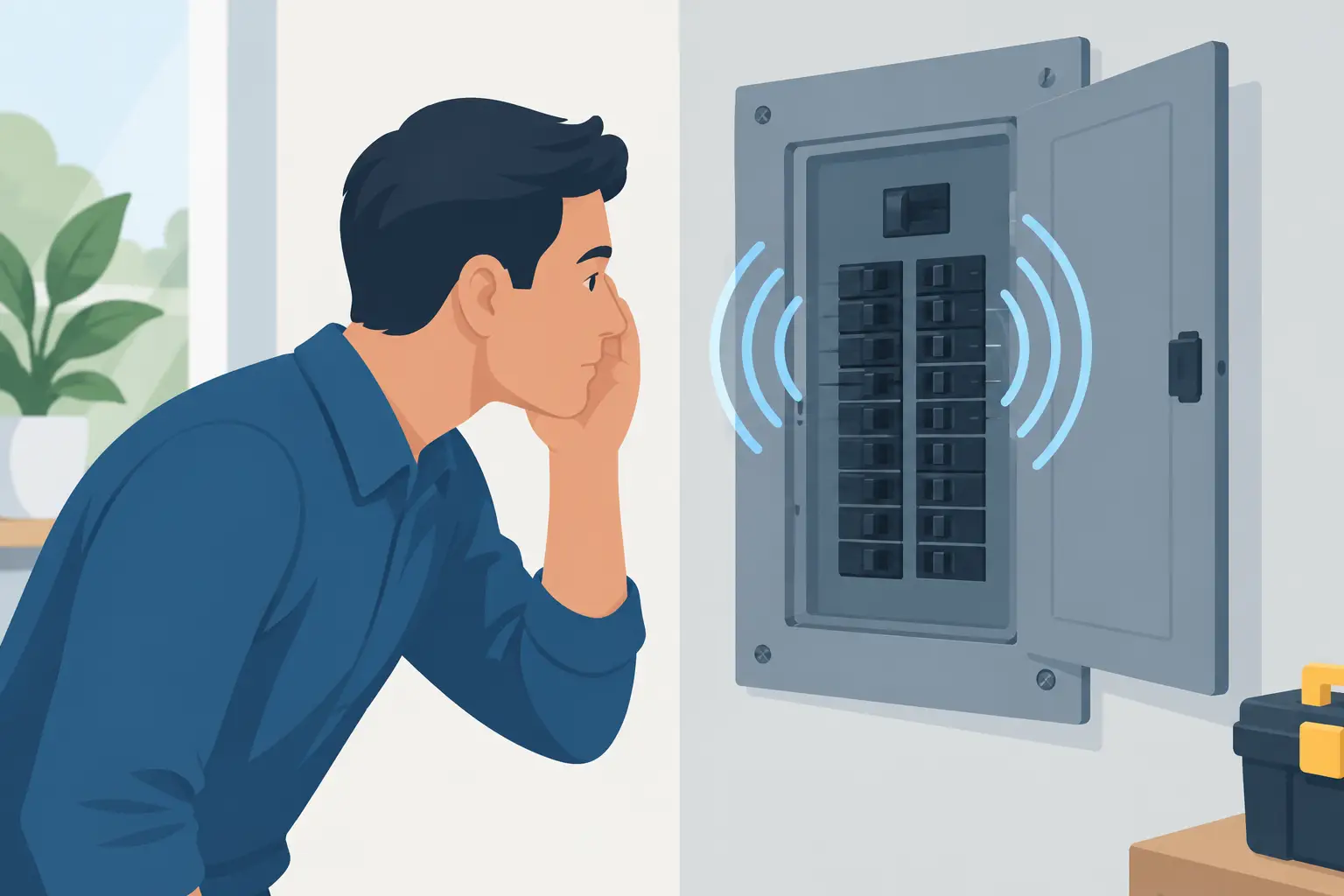
A buzzing, crackling, popping, or sizzling sound from electrical equipment or wiring.
A panel, outlet cover, plug, or cord that feels unusually hot.
Water entering a panel, outlet, junction box, service equipment, or area with exposed wiring.
Partial power loss, flickering across multiple circuits, or unusual voltage behavior such as lights becoming suddenly brighter or dimmer.
Damage to service equipment, meter equipment, or exterior wiring after a storm, vehicle impact, fallen tree, or construction incident.
A single failed outlet may be a routine repair, depending on the cause. But a failed outlet combined with heat, odor, repeated breaker trips, or visible damage should be treated as an urgent fault. The same principle applies to commercial spaces: one disrupted circuit may be manageable, while a panel failure affecting refrigeration, security, emergency lighting, point-of-sale systems, or critical equipment needs rapid assessment.
What to Do Before an Emergency Electrician Arrives
The goal is not to diagnose the system yourself. The goal is to reduce exposure to the hazard without creating another one.
If there is smoke, visible fire, or an immediate threat to life, leave the building and call 911. Do not use water on an electrical fire. If it is safe to do so and you can reach the panel without passing through a hazardous area, turn off the affected circuit or the main disconnect. If the panel is hot, damaged, wet, sparking, or producing smoke, do not touch it.
Keep people away from the affected area, especially children, tenants, customers, and untrained staff. Unplug connected equipment only when there is no heat, smoke, water, or visible damage at the receptacle. Avoid using extension cords as a permanent workaround, and do not repeatedly reset a tripped breaker. A breaker trips because it has detected an abnormal condition. Forcing it back on can energize damaged wiring or a failing appliance.
For a business, document the symptoms and operational impact while you wait. Note which circuits lost power, what equipment was running, when the issue began, and whether weather, water, recent construction, or a new appliance may be involved. This information helps the electrician narrow the diagnostic path and reduce downtime.
Why Repeated Breaker Trips Need Investigation
A breaker is a protective device, not a nuisance component. It opens the circuit when it detects overload, short-circuit, ground-fault, or other unsafe conditions. Resetting it once after an obvious temporary overload may be reasonable. Repeated tripping is a signal that the circuit needs inspection.
The cause may be as simple as too much load on one branch circuit. It may also involve a damaged conductor, loose connection, failing breaker, deteriorated receptacle, appliance fault, or a wiring condition that does not meet current safety requirements. The repair depends on the source of the failure. Replacing a breaker without confirming the underlying condition can leave the hazard in place.
This is especially relevant in older homes and commercial properties that have added equipment over time. New HVAC loads, kitchen appliances, workshop tools, servers, signage, or tenant improvements can exceed the capacity of an existing circuit or panel. A licensed contractor can verify loading, conductor sizing, grounding, overcurrent protection, and required upgrades under applicable NEC and local code requirements.
Emergency Electrical Problems After Water or Storm Damage
Water and electricity are a high-risk combination. Flooding, roof leaks, plumbing failures, wind-driven rain, and storm damage can compromise outlets, panels, service equipment, and concealed wiring. Even after surfaces appear dry, corrosion and insulation damage can remain inside electrical enclosures.
Do not assume an affected circuit is safe because power has returned. Water exposure can create delayed failures, including corrosion at terminals, compromised breakers, and arcing connections. An electrician should inspect the affected equipment, determine what must be replaced, and verify that grounding and protective devices are functioning correctly before circuits are returned to service.
After a severe storm, the boundary between utility-side and property-side damage also matters. The utility may need to address its equipment before a contractor can repair the service entrance, meter base, panel, or interior distribution system. Clear documentation helps coordinate that work and supports insurance conversations where applicable.
Commercial Electrical Emergencies Require a Continuity Plan
For a business or facility, emergency electrical service is about more than restoring lights. A fault can stop production, interrupt customer transactions, disable access control, spoil inventory, affect life-safety systems, or create a compliance exposure. The fastest repair is not always the safest repair if the system has not been properly evaluated.
A disciplined emergency response identifies the fault, isolates the affected section, verifies the condition of related equipment, and restores service in a controlled sequence. In some cases, temporary isolation allows a facility to keep essential operations running while permanent repairs are scheduled. In others, shutting down equipment is the only responsible decision until damaged components are replaced.
Facility managers benefit from maintaining current panel schedules, equipment records, previous repair documentation, and a clear list of critical loads. Those records reduce uncertainty during an outage and make it easier to prioritize the systems that protect people and operations.
What a Qualified Emergency Electrician Should Verify
Emergency work should be precise, not improvised. A qualified electrician begins by identifying whether the hazard involves the service, panel, branch circuit, connected equipment, grounding system, or utility connection. Testing may include voltage verification, load assessment, insulation and connection inspection, breaker evaluation, and thermal indicators where appropriate.
The repair should address the failure mechanism, not only the visible symptom. If an outlet burned because of a loose connection, replacing the outlet alone may not be enough. The circuit conductors, box condition, upstream connections, load demand, and protective device may also require verification.
Code compliance is part of the safety result. Properly rated materials, correct conductor terminations, grounding and bonding integrity, GFCI or AFCI protection where required, panel labeling, and documented repairs all contribute to a stable electrical system. M&S Electric performs emergency diagnosis and repair with licensed accountability under Alabama License AL #09426 and an NEC-based safety standard.
Prevention Starts After the Urgent Repair
Once the immediate hazard is controlled, consider why it occurred and whether similar conditions exist elsewhere. A professional inspection may reveal overloaded circuits, aging panels, inadequate grounding, loose terminations, obsolete equipment, or additions made without sufficient capacity planning.
For homeowners, a panel upgrade, dedicated circuit, surge protection, or targeted rewiring may prevent repeat failures. For commercial properties, preventive maintenance, infrared scanning, load studies, panel documentation, and scheduled compliance reviews can identify weak points before they create an outage.
An emergency repair restores safety in the moment. The more valuable next step is correcting the condition that allowed the emergency to develop, so your electrical system can support daily life and business operations with the stability it is supposed to provide.


Comments