
How to Prevent Electrical Fires at Home and Work

A warm outlet faceplate, a breaker that trips repeatedly, or lights that dim when equipment starts are not minor inconveniences. They are operating signals from an electrical system that may be overloaded, damaged, or improperly protected. Knowing how to prevent electrical fires starts with taking those signals seriously before heat, arcing, or insulation failure creates a fire condition.
Electrical fires rarely begin without warning. In homes, the cause may be aging wiring, a loose connection, an overloaded extension cord, or a failing appliance. In commercial settings, it may be an undersized circuit, deferred maintenance, unauthorized modifications, or equipment added without evaluating the building's electrical capacity. Prevention requires both safe daily use and professional verification of the infrastructure behind the walls.
How to Prevent Electrical Fires by Controlling Heat
Most electrical fire hazards come down to excess heat. Electricity moving through a conductor creates heat naturally, but properly sized wiring, secure terminations, and correctly rated overcurrent protection keep that heat within safe limits. When a connection loosens, a conductor is overloaded, or insulation deteriorates, resistance rises and heat concentrates at the failure point.
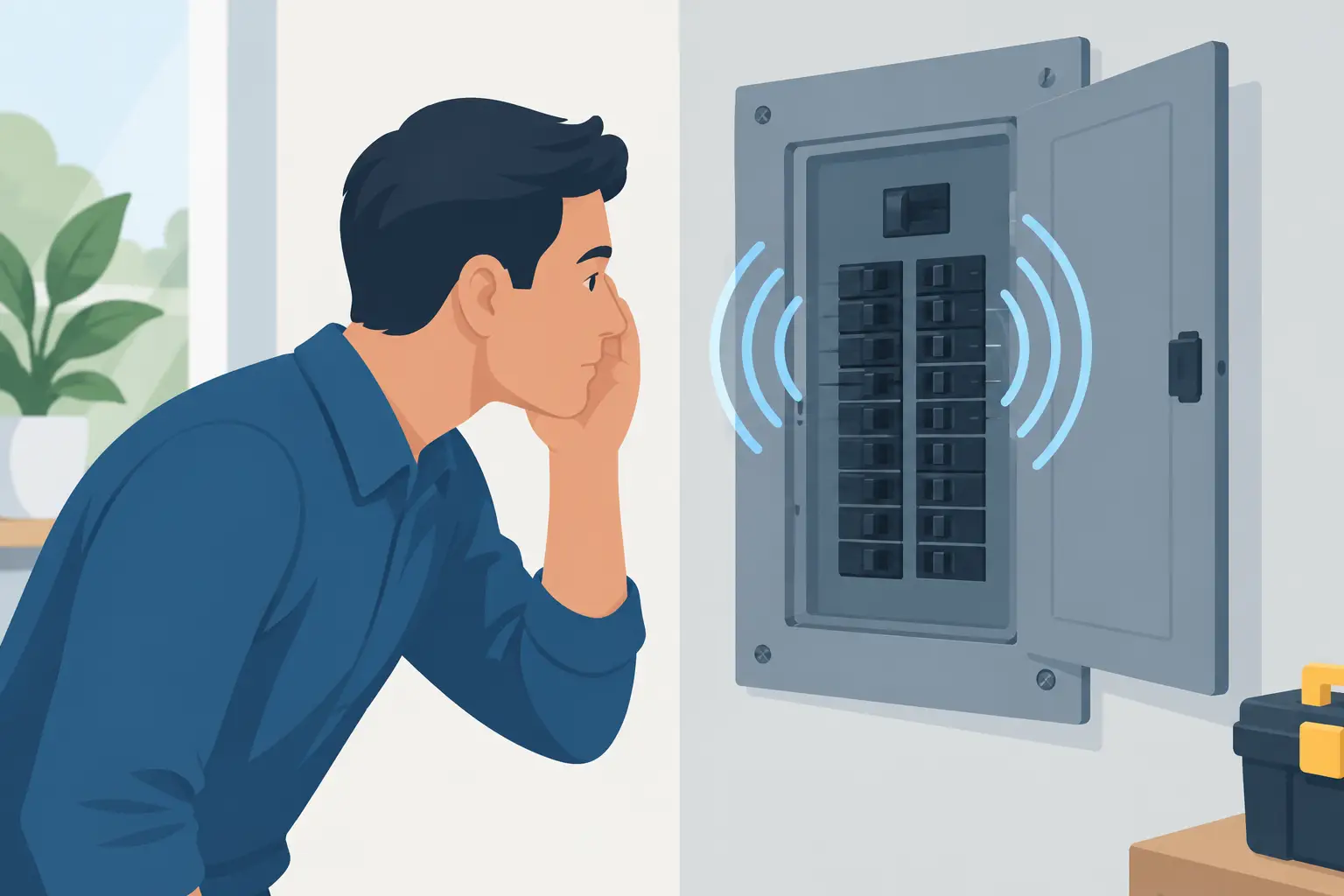
Do not treat repeated breaker trips as a nuisance. A breaker is designed to interrupt power when a circuit draws more current than it can safely carry or when a fault is present. Resetting it once after identifying a temporary cause can be reasonable. Resetting it repeatedly without finding the source can allow a developing problem to continue.
The same principle applies to fuses. Never replace a fuse with a higher-amperage fuse to stop it from blowing. That defeats the protective function and can allow wiring to overheat before the fuse opens the circuit. Circuit protection must match the conductor size, load calculation, and equipment requirements.
A burning odor, buzzing, crackling, visible discoloration, a hot panel cover, or smoke from an outlet requires immediate action. If it is safe to do so, turn off power at the main disconnect or affected breaker, keep people away from the area, and contact a licensed electrician. Call emergency services if there is active smoke or fire. Do not use water on an energized electrical fire.
Keep Circuits Within Their Rated Capacity
Power strips and extension cords are useful for temporary, low-demand needs. They are not a substitute for permanent wiring. A power strip serving a television and low-power electronics is different from one carrying a space heater, microwave, refrigerator, printer bank, or high-load commercial equipment.
High-wattage appliances should generally have their own properly installed receptacle or dedicated circuit when required by the manufacturer or code. Space heaters, portable air conditioners, toaster ovens, and similar equipment draw substantial current. Plug them directly into a wall receptacle, not into extension cords or power strips, and keep them clear of curtains, furniture, paper, and other combustible material.
Avoid daisy-chaining power strips or extension cords. The visible number of outlets does not increase the capacity of the circuit feeding them. In offices and facilities, a row of workstations, chargers, heaters, and printers can quietly overload a branch circuit even when no single device appears unusual.
If your building regularly depends on extension cords, temporary wiring has become permanent by default. That is the point to install additional receptacles, dedicated circuits, or properly designed distribution equipment. The right solution depends on the load, equipment location, occupancy, and future expansion plans.
Inspect Cords, Outlets, and Appliances Before They Fail
Damaged flexible cords are a common and preventable source of electrical failure. Replace cords with cracked insulation, exposed wire, loose plugs, bent blades, or scorch marks. Do not repair a damaged cord with electrical tape as a long-term solution, and do not run cords under rugs, through doorways, or beneath furniture where heat and physical damage can go unnoticed.
Outlets should hold plugs firmly. A loose receptacle can create poor contact between the plug blades and internal terminals, leading to arcing and heat. Receptacles that are warm, discolored, cracked, loose in the wall, or intermittently powered should be evaluated promptly.
Appliance condition matters as well. Motors, heating elements, and internal wiring wear over time. Unplug appliances that produce unusual odors, sparks, shocks, or erratic performance until they can be repaired or replaced. In commercial spaces, include plug-connected equipment in routine maintenance reviews rather than limiting inspections to panels and fixed wiring.
Use the Right Protection in Wet and High-Risk Areas
Water increases the risk of shock and fault conditions. Ground-fault circuit interrupter, or GFCI, protection is required in many locations where people may contact electricity near water, including bathrooms, kitchens, garages, exterior areas, and other locations defined by current code. A GFCI quickly disconnects power when it detects current taking an unintended path.
Test GFCI receptacles according to the manufacturer's instructions, typically using the built-in test and reset buttons. A GFCI that will not reset, will not test properly, or trips without an identifiable reason needs professional diagnosis. The issue could be the device, downstream wiring, moisture intrusion, or an appliance fault.
Arc-fault circuit interrupter, or AFCI, protection addresses a different risk. It is designed to detect certain dangerous arcing conditions that standard breakers may not catch. AFCI protection is commonly required in many dwelling-unit areas under modern NEC standards. Nuisance tripping should not be assumed. It can result from a failing appliance, damaged cord, loose connection, or an issue requiring closer evaluation.
Do Not Ignore an Aging Electrical System
Older properties can operate safely, but age increases the need for informed inspection. Original panels may lack capacity for modern loads. Wiring insulation can become brittle. Previous renovations may have introduced concealed splices, improperly sized conductors, or ungrounded outlets that look modern but do not provide modern protection.
Aluminum branch-circuit wiring, certain legacy panel equipment, and outdated fuse-based systems require case-specific evaluation. The correct response is not always a full rewire, but it should never be guesswork. A licensed electrician can assess conductor condition, termination methods, grounding and bonding, panel capacity, and the practical scope of any necessary upgrades.
Watch for warning signs such as frequent dimming lights, appliances that struggle when other loads start, two-prong outlets throughout the property, or a panel with no available space for needed circuits. A panel upgrade can improve capacity and protection, but it must be based on a load calculation and a review of service equipment, grounding, and local permitting requirements.
Maintain Panels and Electrical Rooms for Safe Access
Electrical panels need clear working space, secure covers, accurate labeling, and protection from moisture or physical damage. Do not store paint, boxes, cleaning supplies, or flammable materials in front of a panel. In a commercial facility, blocked access can delay shutdown during an emergency and complicate required maintenance.
Keep panel doors closed and never operate equipment with missing knockouts, damaged covers, or exposed live parts. A panel is not a homeowner or maintenance-staff repair area. Loose terminations, corrosion, overloaded bus components, and improper breaker selection can create serious hazards that are not visible from the outside.
For businesses, periodic infrared scanning, torque verification where appropriate, load monitoring, and documented inspections can identify heating connections before failure. The right maintenance schedule depends on building age, load intensity, equipment criticality, and operating conditions. A small office does not need the same program as a production facility, but neither should rely on a run-to-failure approach.
Treat Modifications and Generators as Electrical Projects
Adding a receptacle, finishing a basement, installing new lighting, upgrading HVAC equipment, or connecting a generator changes the demands on the electrical system. Unpermitted or poorly executed work can leave overloaded circuits, concealed junctions, missing protection, and code violations behind finished walls.
Portable generators require special attention. Never connect a generator directly to a home outlet or panel without approved transfer equipment. This practice, often called backfeeding, can energize utility lines and create a severe shock and fire hazard. A properly installed transfer switch or interlock arrangement allows power to be managed safely and prevents incompatible sources from being connected at the same time.
Commercial equipment additions should be reviewed before installation, not after breakers begin tripping. Load calculations, conductor sizing, disconnect requirements, short-circuit ratings, and equipment clearances are all part of a compliant installation. Early planning protects uptime and reduces the cost of corrective work later.
Make Professional Inspection Part of Prevention
A visual check by an owner or facility manager is valuable, but it cannot confirm the condition of concealed wiring, internal panel connections, grounding paths, or circuit loading. A professional electrical safety inspection provides a documented review of the system's condition and identifies priorities based on actual risk.
Schedule an inspection after purchasing an older property, before a major renovation, after flood or storm damage, when adding significant equipment, or whenever warning signs appear. Property owners in Florence, Muscle Shoals, Killen, Sheffield, Tuscumbia, Athens, and Decatur should also account for local permitting and inspection requirements when planning upgrades.
M&S Electric performs code-focused inspections, diagnostics, repairs, and upgrades under Alabama License AL #09426. The goal is not simply to restore power. It is to verify that the system can carry its intended load safely, with protection and documentation that support long-term reliability.
Electrical fire prevention is strongest when small warnings lead to prompt action. Replace the damaged cord, stop using the hot outlet, clear the panel, and schedule qualified diagnosis before a hidden connection has time to become a costly emergency.


Comments